Ancient Olympia visitor guide for planning
Ancient Olympia is the archaeological sanctuary and museum complex best known as the birthplace of the Olympic Games. A visit here is more spread out than many travelers expect: you’ll move between open ruins, long walking paths, and a museum that gives essential context to foundations that can otherwise feel abstract. The difference between a rushed visit and a rewarding one is usually sequencing — start with the museum or go very early in the ruins. This guide covers timings, routes, tickets, and practical day-of tips.
Quick overview
If you want the visit to feel meaningful rather than just scenic, plan around heat, walking distance, and the fact that the ruins make much more sense with context.
- When to visit: Daily, with longer hours in the warmer months and shorter winter hours; 8am–10am is noticeably calmer than 11am–2pm, because cruise and coach groups tend to hit the site late morning and the open ruins feel much hotter by then.
- Getting in: From €12 for standard entry in the lower season, with the archaeological site and museum covered on one ticket. Guided tours usually start from about $35. You can often buy on the day, but spring weekends and summer cruise dates are better booked ahead if you want a guide.
- How long to allow: 3–4 hours for most visitors. It stretches toward 5 hours if you cover the museum properly, walk the full stadium area, and linger at the training grounds.
- What most people miss: The Bouleuterion and the Palaestra add real depth, because they explain how the Games were run and how athletes trained before they ever reached the stadium.
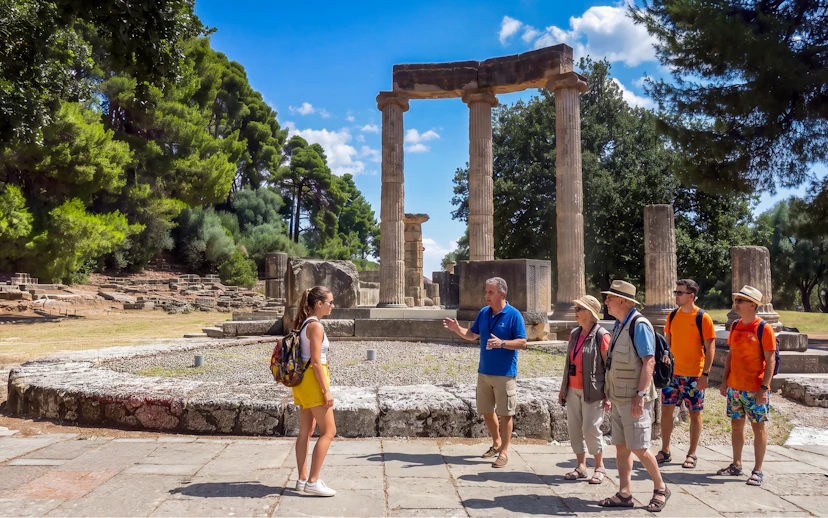
- Is a guide worth it? Yes, more than at most ruin sites, because much of Olympia survives as foundations; a guide or strong audio tour helps you read the space instead of just walking past stones.
🎟️ Guided tours for Ancient Olympia fill up first on spring weekends and cruise-ship days. Lock in your visit before the time you want is gone.
Jump to what you need
🕒 Where and when to go
🗓️ How much time do you need?
🎟️ Which ticket is right for you?
🗺️ Getting around
🏛️ What to see
♿ Facilities and accessibility
Where and when to go

How do you get to Ancient Olympia?
Ancient Olympia sits beside modern Olympia village in western Peloponnese, around 20km inland from the coast, and is easiest to reach by car or organized transfer rather than by piecing together local transport on the day.
Archaia Olympia 270 65, Greece
- Car: On-site parking areas near the archaeological complex → 5–10 min walk → best option if you’re touring the Peloponnese independently.
- Bus: Olympia village stop → 10–15 min walk → workable for self-guided travelers, but schedules are less forgiving than driving.
- Taxi / shore excursion transfer: Main visitor drop-off near the entrance → short walk → the simplest option from Katakolo port on cruise days.
Getting here from nearby cities
Ancient Olympia works as both a Peloponnese stop and a longer day trip, but your real experience depends on how much time the journey leaves you on site.
From Athens
- Distance: 290km
- Travel time: About 3.5–4.5 hours by car or full-day tour
- Time to budget: A same-day trip is doable, but it leaves you less time to slow down in the museum and training grounds
From Katakolo
- Distance: 35km
- Travel time: About 40–45 minutes by shore excursion coach, taxi, or private transfer
- Time to budget: This is the easiest cruise-day pairing and still leaves enough time for the museum and stadium if you move efficiently
From Patras
- Distance: 100km
- Travel time: About 1.5–2 hours by car
- Time to budget: This works well as a long half-day if you start early and avoid arriving at midday
Which entrance should you use?
Ancient Olympia is straightforward once you’re in, but most visitors underestimate how much time they lose at the entrance if they arrive at the same moment as coach groups. There is effectively one main visitor entrance serving the archaeological site and museum complex.
- Main entrance: Located beside the main ticketing area. Best for all visitors. Expect 5–15 minutes wait on quiet mornings and 20–30 minutes on summer cruise mornings.
When is Ancient Olympia open?
- April–October: 8am–8pm
- November–March: 8:30am–3:30pm
- Last entry: Usually 30 minutes before closing
When is it busiest? Late mornings on spring weekends, summer dates, and cruise-call days are the hardest window, because tour groups cluster around the Temple of Zeus, the museum, and the stadium approach at the same time.
When should you actually go? Aim for 8am–10am or the last 2 hours of the day, when the light is softer, the track is easier to linger in, and the open site feels less punishing in the heat.
How much time do you need?
| Visit type | Route | Duration | Walking distance | What you get |
|---|---|---|---|---|
Highlights only | Museum → Temple of Zeus → Temple of Hera → Stadium → exit | 2–2.5 hours | ~2km | You cover the headline monuments and the most important sculptures, but you’ll skip the training grounds, administrative buildings, and the slower context that makes the Games feel real. |
Balanced visit | Museum → Altis temples → Bouleuterion → Philippeion → Palaestra → Stadium → exit | 3–4 hours | ~3km | This is the sweet spot for most visitors: it adds the organization and athlete-training side of Olympia without turning the visit into an endurance test. |
Full exploration | Museum → full Altis circuit → Bouleuterion → Philippeion → Palaestra → Gymnasium zone → Stadium embankments → slower return through the sacred precinct | 4.5–5.5 hours | ~4km | You get the fullest sense of Olympia as both sanctuary and sports complex, but the open terrain, heat, and limited shade make this route tiring by midday. |
Which Ancient Olympia ticket is best for you
| Ticket type | What's included | Best for | Price range |
|---|---|---|---|
Site + Museum Combo Ticket | Entry to archaeological site + Archaeological Museum of Olympia | A self-paced visit where you want the essential ruins and original sculptures in one straightforward ticket | Entry (from €12) |
Guided Archaeological Tour | Entry + licensed guide + site commentary + museum commentary | A first visit where temple foundations and scattered ruins would otherwise feel too abstract to decode on your own | Guided tour (from $35) |
Audio guide rental / self-guided audio tour | Audio commentary + site map + multilingual narration | A budget-conscious visit where you want context without committing to a fixed group pace | Audio guide (from $5) |
Flame-lighting ceremony access | Event viewing area + ceremony access + guided context | A date-specific trip built around the modern Olympic connection rather than a standard ruins visit | Special event (from $50) |
Olympia and coast combo tour | Olympia visit + onward beach or regional stop depending on itinerary | A full-day outing where you want more than one stop without self-driving the Peloponnese | From $60 |
How do you get around Ancient Olympia?
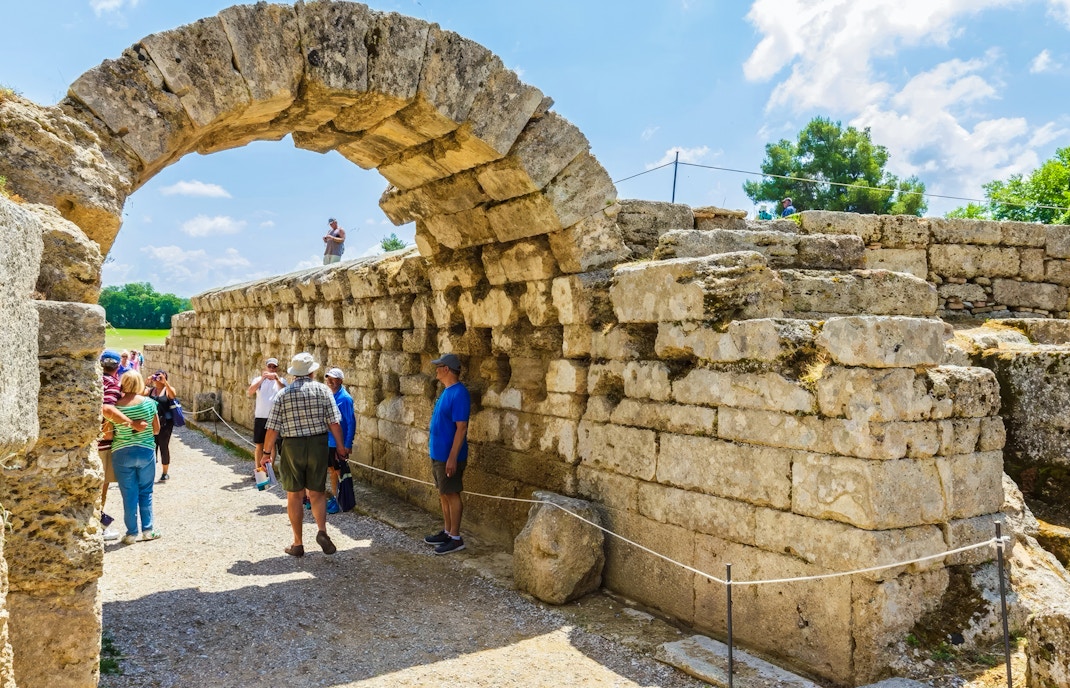
Ancient Olympia is best explored on foot and usually takes 3–4 hours to cover well; the main sanctuary is compact, but the walk out to the stadium and training grounds makes route order matter. The temple zone and museum sit near the front of the visit, while the stadium lies farther east beyond the passage that most visitors remember best.
Site layout
Ancient Olympia is best explored on foot and is large enough to reward a route rather than wandering. The main sacred area sits near the temples, with the stadium farther east and the athletic training buildings reached as you branch south and east from the core.
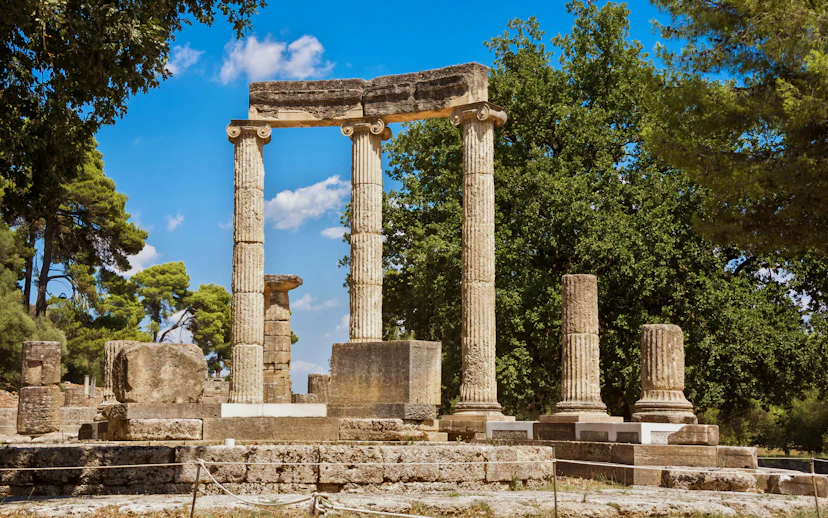
- Altis / sacred precinct: Temple of Zeus, Temple of Hera, Philippeion, and major ritual spaces → budget 45–60 minutes.
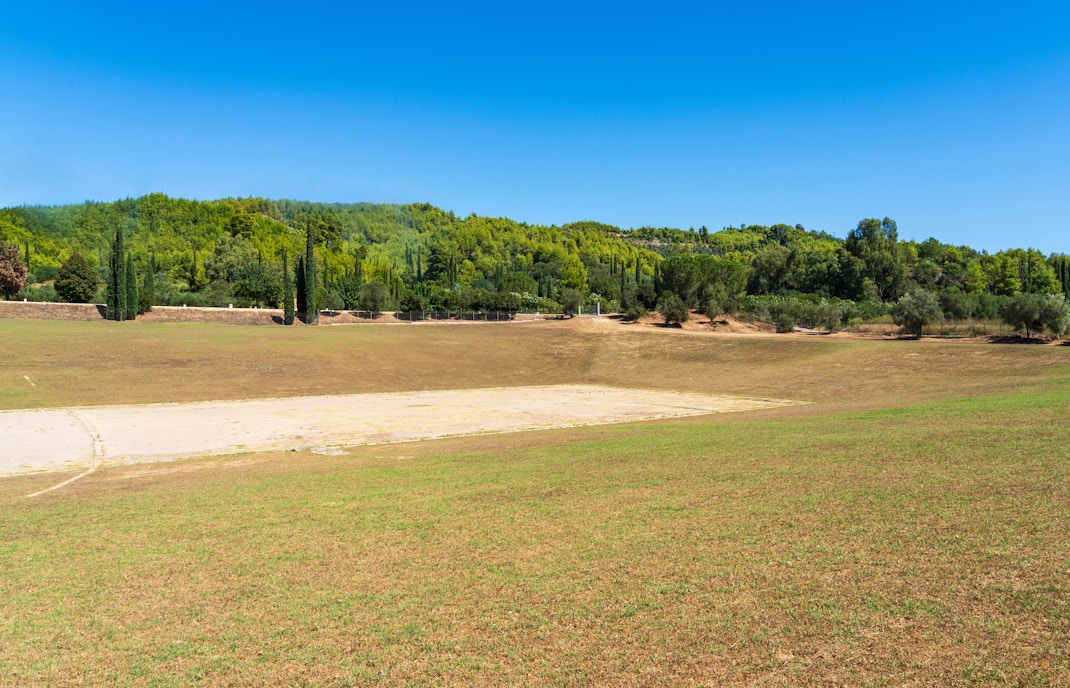
- Stadium zone: Original race track, starting line, and spectator embankments → budget 20–30 minutes.
- Training grounds: Palaestra and gymnasium remains that explain how athletes prepared → budget 20–30 minutes.
- Museum: Original sculpture, temple pediments, Hermes of Praxiteles, and Nike of Paionios → budget 45–60 minutes.
Suggested route: Start in the museum if you want the ruins to make immediate sense, then move through the Altis to the stadium and finish with the training grounds; most visitors miss the Bouleuterion and Palaestra because crowd flow pulls them straight from the temples to the track.
Maps and navigation tools
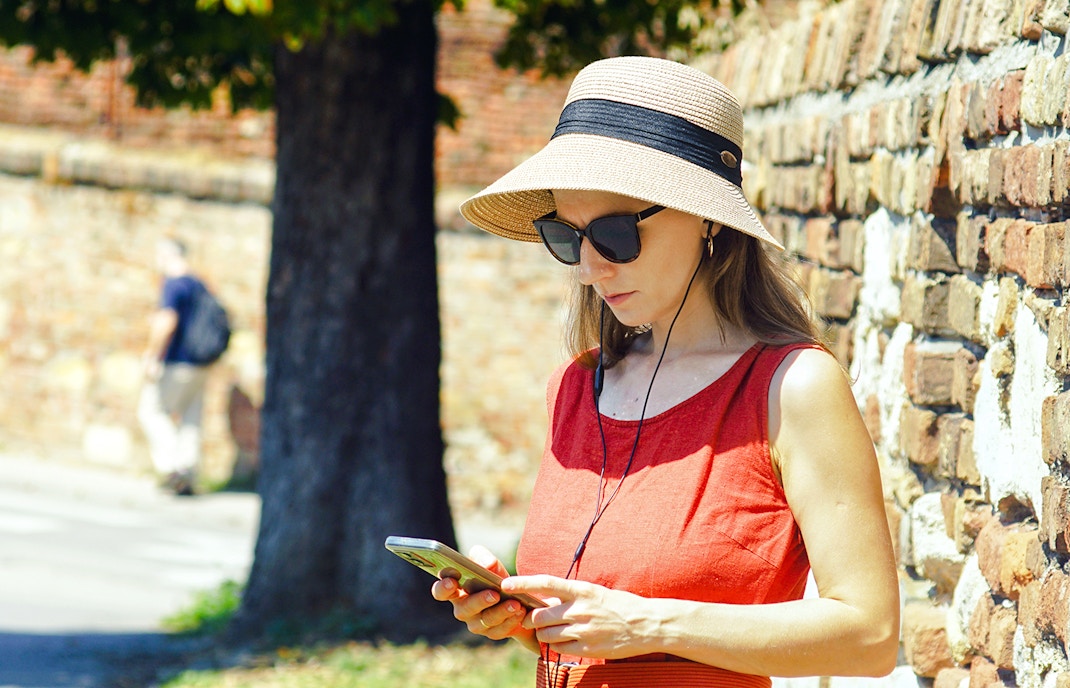
- Map: Downloaded site map or printed visitor plan → covers the ruins, stadium, and museum → get it before arrival because you’ll use it more than you think.
- Signage: Wayfinding is serviceable for the main route, but it is not strong enough to explain the less obvious ruins without a map or guide.
- Audio guide / app: Smartphone audio tours and rentals are the most useful add-on here because they explain foundations that otherwise look similar at first glance.
- Large outdoor POIs only: A downloaded map helps most in the stadium and training-ground sections, where the layout opens up and distances feel longer in the heat.
💡 Pro tip: Start with the museum or download an audio guide before you enter the ruins, once you’ve seen the sculptures and temple fragments up close, the open-air site reads far more clearly.
What are the most significant spaces in Ancient Olympia?
Temple of Zeus
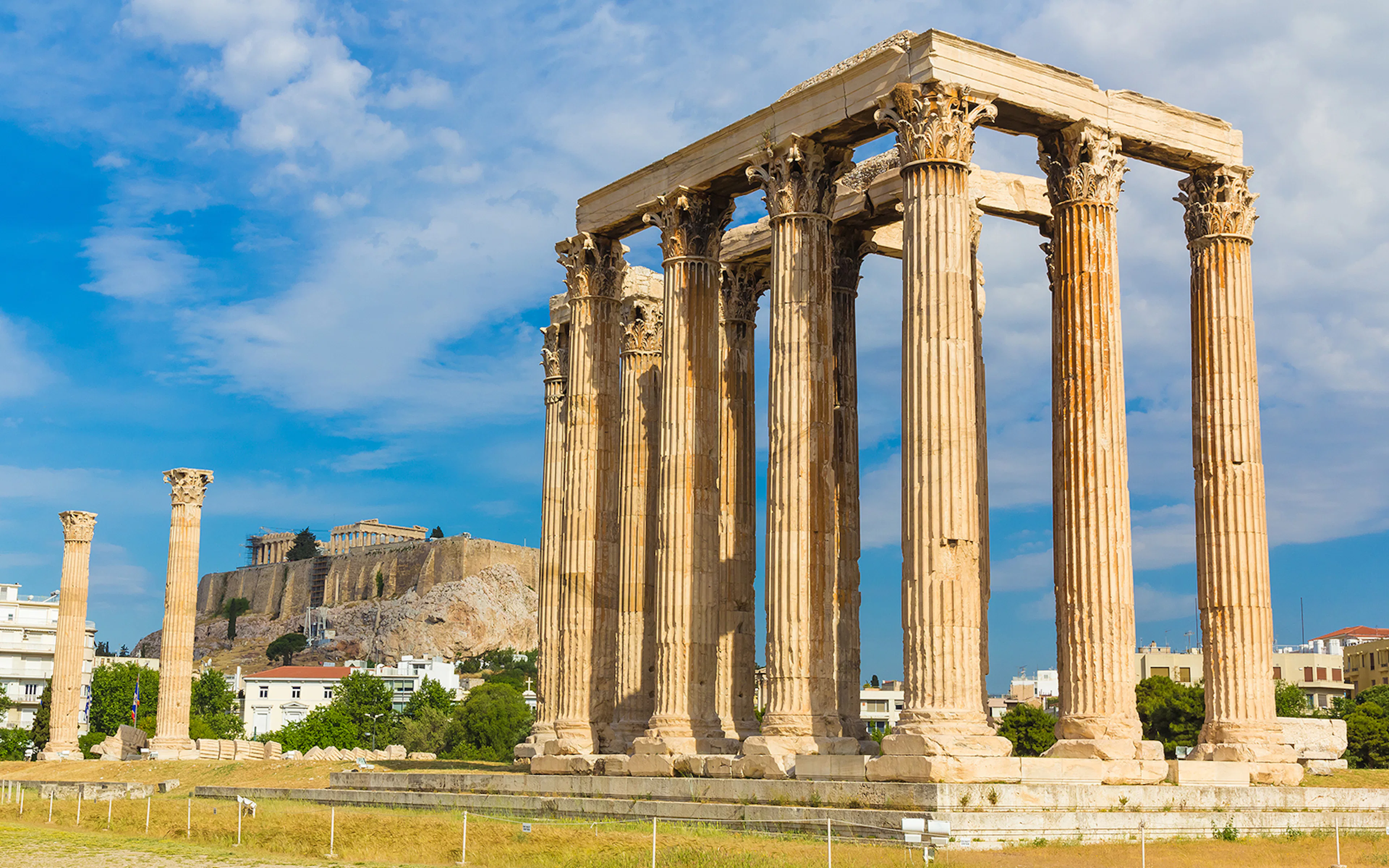
Era: 470–457 B.C.
This was the monumental heart of Olympia and the place where Phidias’ colossal statue of Zeus — one of the Seven Wonders of the ancient world — once stood. What you see now is mostly fallen architecture, so it rewards a slower look than many visitors give it. Most people focus on the broken columns and miss how huge the footprint still is.
Where to find it: In the central sacred precinct, west of the main route toward the stadium.
Temple of Hera
Era: Around 590 B.C.
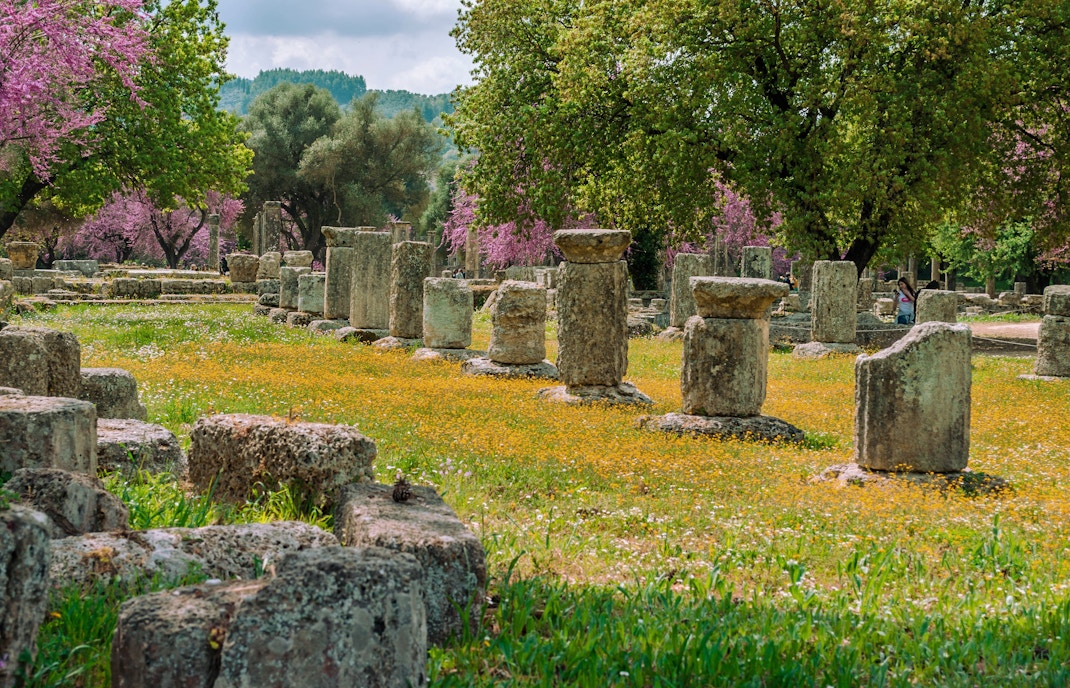
The Temple of Hera is older, smaller, and easier to read visually than the Temple of Zeus, which is why it often feels more evocative on the ground. It is also where the modern Olympic flame is ceremonially lit, which gives it a second life beyond the ancient ruins. Many visitors rush past without noticing how much of the Doric rhythm still survives in the standing columns.
Where to find it: Inside the Altis, close to the Temple of Zeus and easy to combine with the Philippeion.
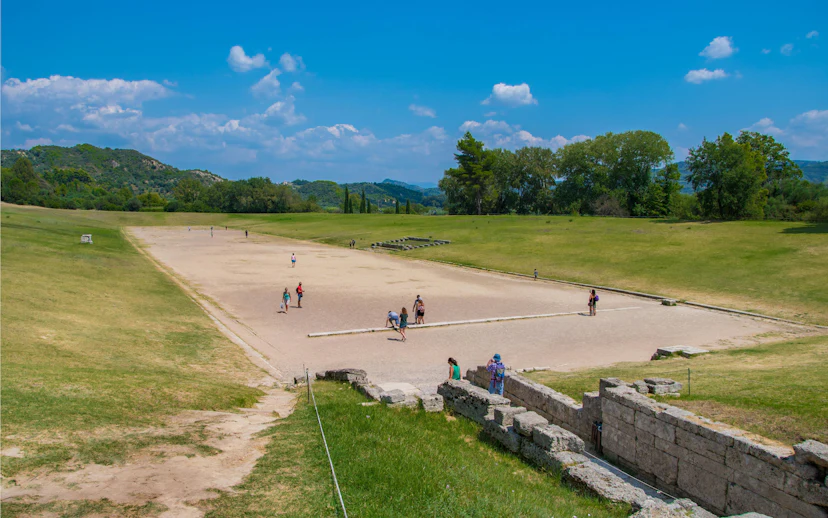
Ancient Olympic Stadium
Attribute — Type: Athletic venue
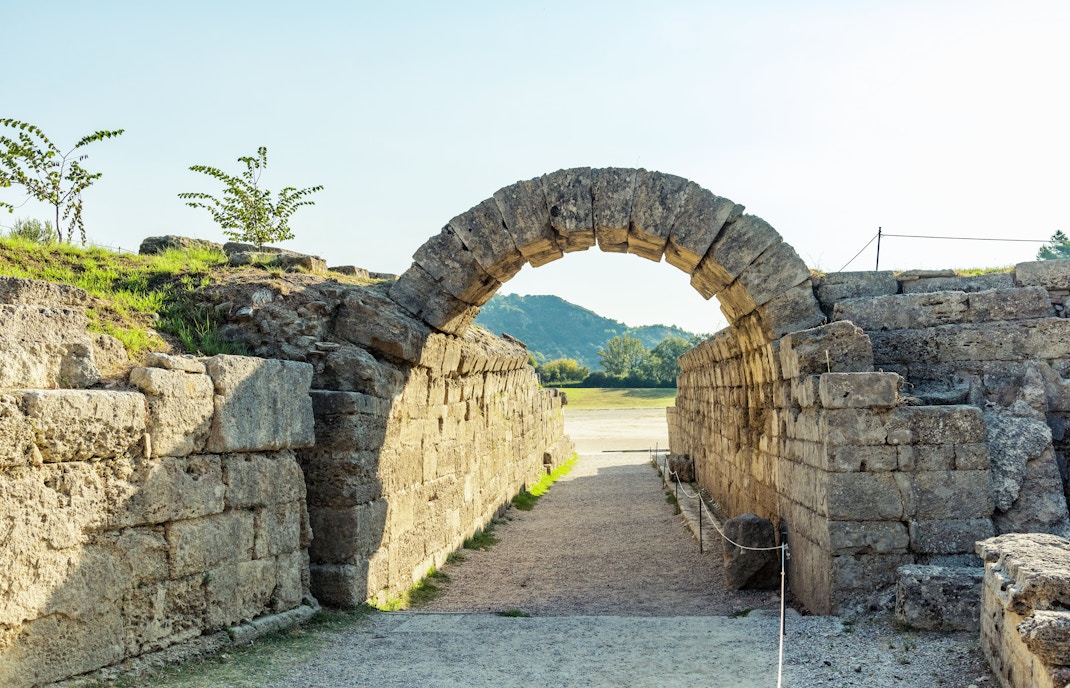
The stadium is the emotional payoff of the visit because it still feels like a place built for bodies and spectators rather than just archaeological remains. Standing on the original starting line is the moment many visitors remember most. What people often miss is the scale of the spectator embankments, which explains just how big the ancient Games had become.
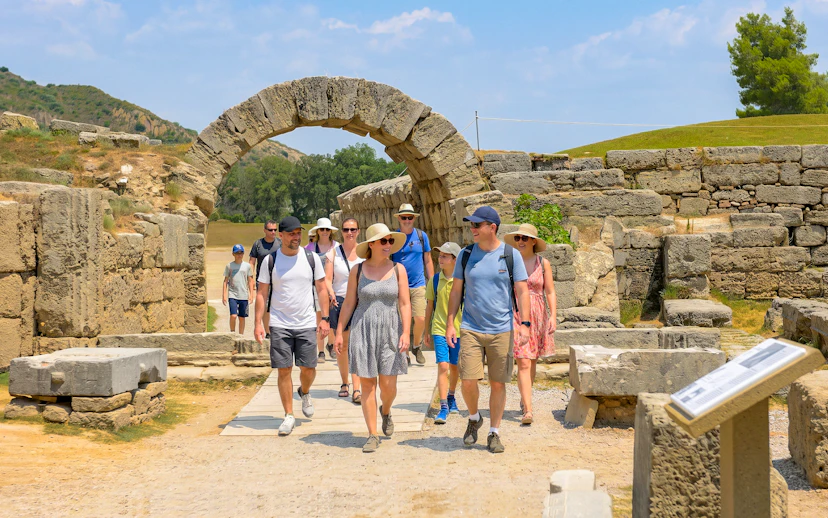
Where to find it: East of the main sanctuary, reached through the arched approach beyond the sacred precinct.
Bouleuterion
Attribute — Function: Council house and administrative center
The Bouleuterion rarely tops visitors’ wish lists, but it is one of the keys to understanding Olympia as more than a sports ground. This is where officials organized the Games, handled disputes, and oversaw athlete procedures. Because the remains are fragmentary, people often pass quickly, but with context it becomes one of the most revealing stops on site.
Where to find it: South of the Temple of Zeus area, near the administrative and training buildings.
Palaestra and gymnasium
Attribute — Type: Athlete training complex
These ruins show the disciplined side of Olympia that the stadium alone cannot: practice, preparation, and repetition before competition. The Palaestra’s layout is easier to follow than many first-time visitors expect, and it gives a clearer sense of daily athletic life. Most travelers cut this part when they’re tired, even though it adds some of the best context on the whole site.
Where to find it: South and southeast of the main sacred precinct, beyond the administrative zone.
Archaeological Museum of Olympia
Attribute — Collection: Original sculpture and temple decoration
The museum is not an optional add-on here — it is the key that makes the ruins outside readable. Highlights include Praxiteles’ Hermes and the Infant Dionysus, the Nike of Paionios, and sculptural fragments from the Temple of Zeus. Many people save it for last and rush it; if you have the energy, this is the section worth slowing down for.
Where to find it: Adjacent to the archaeological site entrance, usually visited before or after the ruins.
Facilities and accessibility
- 🚻 Restrooms: Use the facilities near the entrance and museum before you head deep into the ruins, because there are no convenient restroom stops across the open site.
- 🍽️ Café / bar: There is a café-bar between the site and museum for drinks and quick snacks, but many visitors find it more expensive than expected.
- 🪑 Seating / rest areas: The museum is the best place to cool down and reset, while the ruins themselves have only limited natural shade and fewer comfortable stopping points than the greenery suggests.
- ❄️ Air-conditioned break: The museum is the most reliable heat break on hot days and works well as a midday reset between outdoor sections.
- ♿ Mobility: Access is partial rather than seamless, because the archaeological site includes uneven paths, gravel, dirt, and grassy sections, while the museum is the easier and more comfortable part for visitors using mobility aids.
- 👁️ Visual impairments: A guide or audio tour adds more value here than at many museums, because the site’s low remains and limited interpretive signage can make orientation difficult without spoken context.
- 🧠 Cognitive and sensory needs: Early morning is the easiest low-stress window, since the site is quieter, cooler, and less visually overwhelming than late-morning group-tour hours.
- 👨👩👧 Families and strollers: Strollers work best in the museum and along the main approach routes, but the full archaeological circuit is not pushchair-friendly end to end because of uneven ground and longer walking stretches.
Ancient Olympia works well for children who like running space, stories, and the idea of standing where the Olympic Games began, but it is less successful as a casual wander once the heat rises.
- 🕐 Time: 2–3 hours is realistic with young children if you prioritize the stadium, Temple of Hera, and a shorter museum visit instead of trying to cover every ruin.
- 🏠 Facilities: Plan restroom and snack stops around the museum zone, because that is the part of the complex that feels most family-friendly logistically.
- 💡 Engagement: The easiest hook is the starting line in the stadium — once children can imagine the race itself, the rest of the site usually lands better.
- 🎒 Logistics: Bring sun hats, water, and a light bag, and aim for the first entry window so children are not doing the stadium walk in the harshest heat.
- 📍 After your visit: The Museum of the History of the Olympic Games in nearby modern Olympia is a good follow-on if your child likes the modern Olympics as much as the ancient story.
Rules and restrictions

What you need to know before you go
- Entry requirement: Standard admission covers both the archaeological site and the Archaeological Museum of Olympia, and discounted tickets are easiest to claim if you carry valid ID.
- Bag policy: Bring only a small day bag if you can, because this is a fully on-foot visit with heat, uneven ground, and few convenient stop points once you are inside.
- Re-entry policy: Keep your ticket stub with you for the day, because leaving and trying to come back casually can break the flow of the visit and cost more time than expected.
Not allowed
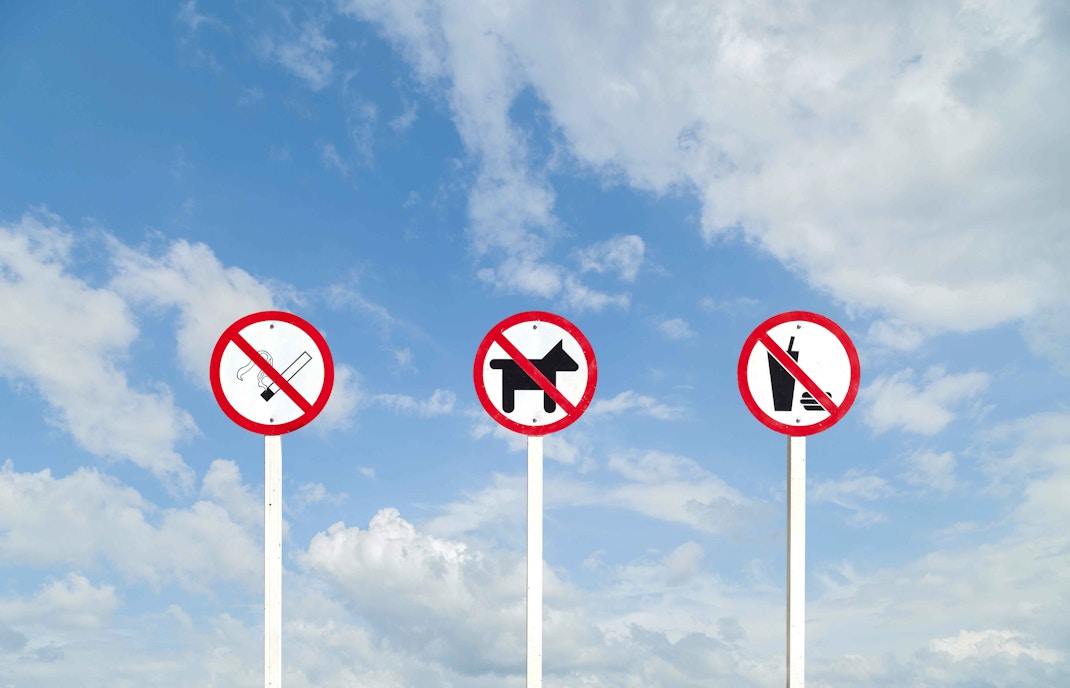
- 🚫 Food and drink: Water is the one thing you should treat as essential, but plan proper meals before or after the ruins because this is not a site built around grazing as you walk.
- 🚬 Smoking / vaping: Smoke away from crowded heritage areas and main paths, especially around the museum entrance and visitor bottlenecks.
- 🐾 Pets: Service animals are the safest assumption for access, but ordinary pet visits are not something to rely on without checking current site policy before you go.
- 🖐️ Touching or climbing ruins: Do not climb, sit on, or scramble across masonry, because many sections are fragile and easier to damage than they appear.

Photography
- Personal photography is part of the appeal at Ancient Olympia, and the open-air ruins are one of the easiest ancient sites in Greece for wide shots and atmospheric detail.
- The main distinction is practical rather than dramatic: the outdoor site is built for photos, while the museum rewards a quieter approach and less bulky gear.
- Keep flash, tripods, and elaborate setups in check indoors, and follow any room-specific signs around major sculptures.
Good to know
- Summer pacing: The biggest mistake here is doing the most exposed stadium and temple sections at noon, when the walking feels longer and the ruins read less clearly because you are just trying to stay cool.
- Museum timing: If you save the museum for last, leave real energy for it — this is not a filler stop, and rushing it makes the ruins outside feel far flatter than they should.
Practical tips
- PraBooking and arrival: Book ahead only if you want a guided visit or you are arriving on a cruise day; for standard entry, the bigger risk is not sellout but hitting the entrance at the exact same time as large tour groups.
- Pacing: Save your concentration for the museum and the Temple of Zeus, because those two stops do the most work in helping the rest of the site make sense.
- Crowd management: The best window is usually the first 2 hours after opening, when the stadium is still quiet and the sanctuary feels far less like a procession route.
- What to bring or leave behind: Bring a hat, sunscreen, and more water than you think you need; the site is greener than many Greek ruins, but it is still exposed for long stretches.
- Route choice: If you’re self-guiding, start with the museum, then move through the Altis to the stadium, and leave the Palaestra and Bouleuterion for the back half once the main crowd thins.
- Food and drink: Eat before you enter or wait until you’re done, because there are no refreshment outlets once you’re deep in the archaeological zone, and the café between the site and museum is mainly a convenience stop.
- Heat strategy: On hot days, split the visit into outdoor ruins first thing, museum in late morning, and any missed ruins only if you still have energy after cooling down.
- Photos: For the most atmospheric shots, aim for the first or last part of the day; the stadium, Temple of Hera, and fallen columns at Zeus all look flatter under harsh midday light.
What else is worth visiting nearby?
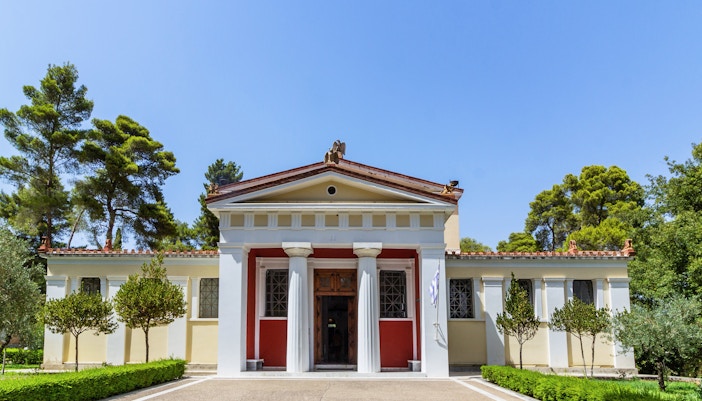
Commonly paired: Museum of the History of the Olympic Games
- Distance: 500m — 5–10 min walk
- Why people combine them: It rounds out the day neatly by connecting the ancient sanctuary with the later Olympic story, which is especially useful if you’re traveling with children or anyone interested in the modern Games.
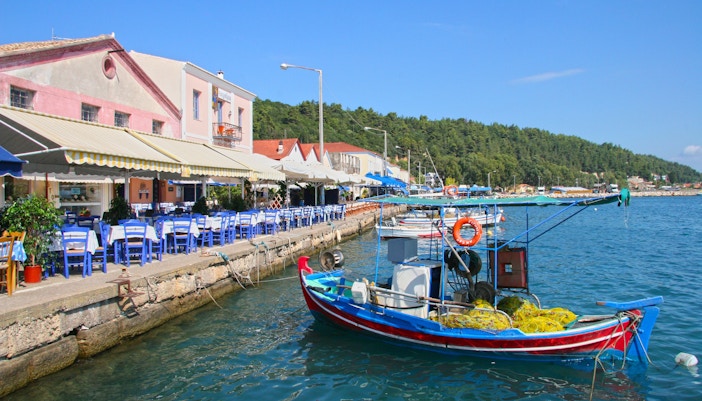
Commonly paired: Katakolo Harbor and village
- Distance: 35km — 40–45 min drive
- Why people combine them: Cruise passengers naturally pair the 2 because Katakolo is the main coastal gateway for inland Olympia visits, and it gives you an easy waterfront meal after a ruin-heavy morning.
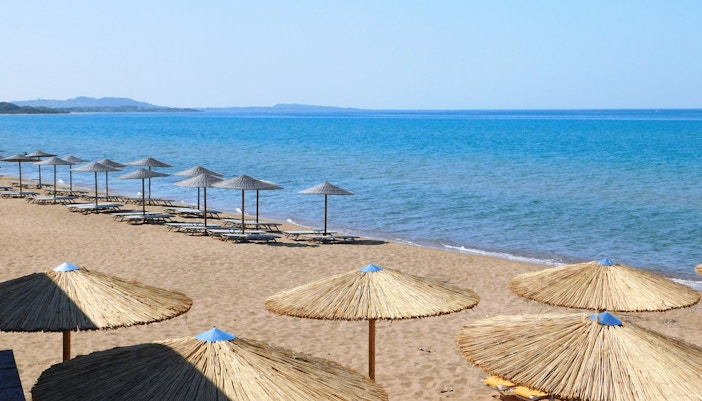
Also nearby
Kourouta Beach
Distance: 15km — 20 min drive
Worth knowing: It is the easiest change of pace after Ancient Olympia if you want lunch, sea air, and something less demanding than another heritage stop.
Temple of Apollo Epikourios at Bassae
Distance: 90km — 1 hr 45 min drive
Worth knowing: This is a stronger fit for archaeology-focused travelers doing a wider Peloponnese loop than for casual same-day visitors, but it makes a rewarding second UNESCO stop.
Eat, shop and stay near Ancient Olympia
- On-site: The café-bar between the site and museum is useful for a drink or quick snack, but visitors often find it pricey enough that it works better as a fallback than a planned meal.
- Better options nearby: Plan lunch in modern Olympia afterward if you want a fuller meal and better value.
- Pro tip: Eat before you enter or plan lunch in modern Olympia afterward, because the ruins themselves have no refreshment points and the museum is a better cool-down stop than a meal stop.
- Shopping near the site: Keep expectations modest and treat shopping here as a small add-on rather than a reason to linger.
Modern Olympia is a practical overnight base if your priority is getting into the site early, before the heat and tour buses build. It is quieter and more functional than atmospheric, so it works best for a one-night cultural stop rather than a long Peloponnese base. If you want beaches, nightlife, or a broader restaurant scene, stay elsewhere and visit Olympia as a day trip.
- Price point: The area generally skews toward simple mid-range stays, with the main value being proximity rather than luxury.
- Best for: Visitors who want to walk or drive a short distance to the entrance first thing and keep logistics light.
- Consider instead: Patras for a bigger-city base or the Ionian coast around Katakolo if you want a trip that balances heritage with sea views and easier post-visit dining.
Frequently asked questions about visiting Ancient Olympia
Most visits take 3–4 hours if you cover both the ruins and the museum properly. You can do a fast highlights loop in about 2 hours, but that usually means skimming the museum or skipping the training grounds, which are some of the best context-building parts of the site.
No, you usually do not need to pre-book standard entry unless you are traveling on a busy spring weekend or want a guided tour. The bigger reason to book ahead is securing the language, group size, or start time you want rather than worrying that the basic site ticket will disappear.
Usually no, because Ancient Olympia is not a queue-heavy site in the same way as the Acropolis or the Vatican. Fast entry matters most on cruise mornings from Katakolo or on high-season late mornings, but for most visitors an early arrival does more to improve the visit than paying extra to shave off a short wait.
Aim to arrive 15–20 minutes before you want to start walking. That gives you time for tickets, restrooms, and orienting yourself without eating into the coolest and quietest part of the morning, which is when the stadium and temple areas feel best.
Yes, but a small day bag is much smarter than a large backpack. Ancient Olympia is an exposed, on-foot site with uneven paths, and there are few convenient pause points once you are inside, so the lighter you travel, the easier the full route feels.
Yes, personal photography is a normal part of the visit. The open-air ruins are especially good for wide shots and detail photos, while the museum calls for a quieter approach and less bulky gear, so follow any room signage and avoid treating the indoor galleries like a studio.
Yes, and it is one of the better Greek archaeological sites for a guided group visit because the story benefits from explanation. If you are joining a large group, expect the main pinch points to be the Temple of Zeus area, the museum highlights, and the approach into the stadium.
Yes, if you time it well and keep the route realistic. Children usually connect most with the stadium, the story of the ancient Games, and the chance to stand on the starting line, but the site becomes tiring quickly in midday heat if you try to do every ruin in one go.
Partly, not fully. The museum is the easier and more comfortable section, but the archaeological site has uneven terrain, dirt, grass, and longer walking stretches that make a complete circuit difficult for many wheelchair users and also awkward with strollers.
Yes, but not in the way many visitors expect once they are inside the ruins. There is a café-bar between the site and museum, yet most people are happier eating before the visit or afterward in modern Olympia rather than relying on a mid-visit food stop.
Yes, the standard admission ticket covers both the archaeological site and the Archaeological Museum of Olympia. That is one of the reasons it is worth budgeting at least 3 hours — the museum is not an optional side stop, it is part of the core experience.
Yes, and that is one of the most common ways people visit. The transfer usually takes about 40–45 minutes each way, so you can see the museum and main ruins in a half-day shore excursion, but you will need to keep a tighter pace than visitors staying locally.