Mycenae Archaeological Site Visitor Guide
Mycenae Archaeological Site is a Bronze Age citadel best known for the Lion Gate, royal tombs, and the legends of Agamemnon. The visit is compact in distance but not effortless: the paths are uphill, the stone is uneven, and summer heat makes timing matter more than people expect. The biggest difference between a rewarding visit and a flat one is context, because some of the most important spots look modest without it. This guide covers timing, entrances, route planning, and what not to rush past.
Quick overview: Mycenae Archaeological Site at a glance
If you want to decide fast, focus on timing, transport, and how much context you want once you’re inside.
- When to visit: Daily opening hours shift by season, but spring and early fall are the sweet spot; the first hour after opening is noticeably calmer than 10:30am–1pm, when Athens day tours and regional coaches tend to arrive together.
- Getting in: From €12 for standard entry. Guided day tours from Athens usually start around $90. You can often buy at the gate, but summer small-group tours and private day trips are worth booking a few days ahead.
- How long to allow: 1.5–2 hours works for most visitors. It stretches closer to 2.5 hours if you do the museum properly, walk up to the summit slowly, and spend time at the Treasury of Atreus.
- What most people miss: The underground cistern staircase and the museum add far more than visitors expect, and both help the citadel make sense beyond the Lion Gate photo stop.
- Is a guide worth it? Yes, if you want the graves, palace remains, and tombs to feel meaningful rather than anonymous stonework; if you’re comfortable reading ahead, a good downloaded Audioguide does enough for less.
🎟️ Small-group tours to Mycenae sell out a few days in advance during July–September. Lock in your visit before the time you want is gone. See ticket options
Jump to what you need
🕒 Where and when to go
🗓️ How much time do you need?
🎟️ Which ticket is right for you?
🗺️ Getting around
🏛️ What to see
♿ Facilities and accessibility
Where and when to go
How do you get to Mycenae?
Mycenae sits in the Argolis region of the Peloponnese, about 120km (75 miles) south-west of Athens and roughly 25 minutes from Nafplio.
- Car: From Athens via the Corinth highway → about 1.5 hours → easiest option if you want to pair Mycenae with Nafplio or Tiryns.
- KTEL bus: Athens to Fichti/Mykines stop → about 2 hr 15 min total → you’ll need a short taxi ride or a 2km (1.2 mile) final approach.
- Local bus: Nafplio to Mykines village → about 30 minutes → useful if you’re staying in Nafplio and don’t want to drive.
Getting here from nearby cities
Mycenae works well as a regional day trip, and Athens, Nafplio, and Corinth are the most practical starting points.
From Athens
- Distance: 120km (75 miles)
- Travel time: About 1.5–2 hours via car or guided coach
- Time to budget: This still leaves plenty of time for the site, museum, and one more stop such as Nafplio or Epidaurus
From Nafplio
- Distance: 22km (13.7 miles)
- Travel time: About 25–30 minutes via car, taxi, or local bus
- Time to budget: This is the easiest base if you want a slower visit and lunch after the ruins
From Corinth
- Distance: 50km (31 miles)
- Travel time: About 45 minutes by car
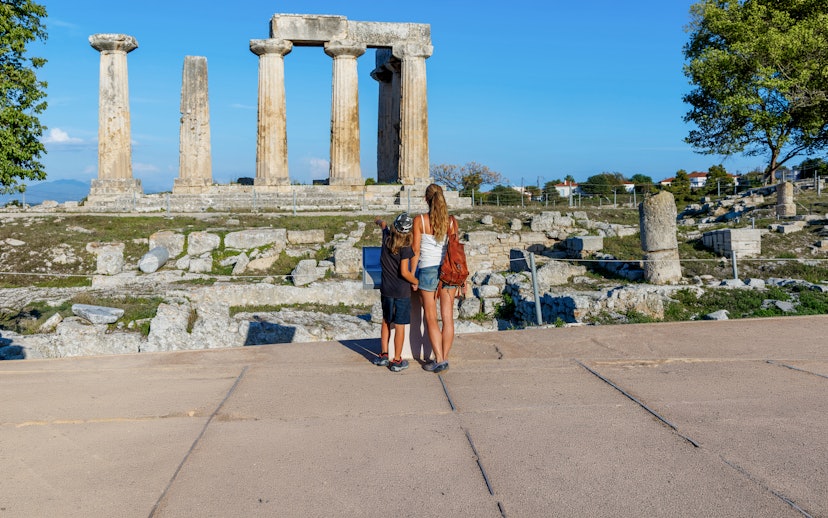
- Time to budget: Easy to combine with Ancient Corinth only if you start early and keep both visits tight
Which entrance should you use?
Mycenae is straightforward once you arrive: there’s one main visitor entrance by the museum and parking area, and the bigger mistake is underestimating the uphill walk once you’re inside.
- Main entrance: Located beside the ticket office, museum, and parking lot. Expect 5–10 minutes’ wait during mid-morning in summer.
When is Mycenae Archaeological Site open?
- April–August: 8am–8pm
- September: 8am–7pm
- October: 8am–6pm
- November–March: 8:30am–3:30pm
- Last entry: 30 minutes before closing
When is it busiest? Weekdays from about 10:30am to 1pm in April–October are busiest, because that’s when most Athens day tours and regional coaches reach the Lion Gate.
When should you actually go? Go right at opening or after about 3pm in warmer months if you want cooler light, fewer bottlenecks at the gate, and more space at the Treasury of Atreus.
How much time do you need?
| Visit type | Route | Duration | What you get |
|---|---|---|---|
Quick visit | Lion Gate → Grave Circle A → Treasury of Atreus | 1–1.5 hrs | Covers Mycenae’s most iconic landmarks and gives a solid introduction to the ancient citadel and its royal tombs |
Standard visit | Lion Gate → Palace ruins → Grave Circle → Museum → Treasury of Atreus | 2–3 hrs | A balanced visit combining the main archaeological highlights with museum exhibits that explain Mycenaean civilization and daily life |
In-depth visit | Full archaeological circuit → Museum galleries → Treasury of Atreus → Panoramic viewpoints → Detailed exploration | 3.5–5 hrs | A complete experience with time to explore the ruins in depth, study artifacts, enjoy scenic views, and fully understand the history of ancient Mycenae |
Which Mycenae Archaeological Site ticket is best for you
| Ticket type | What's included | Best for | Price range |
|---|---|---|---|
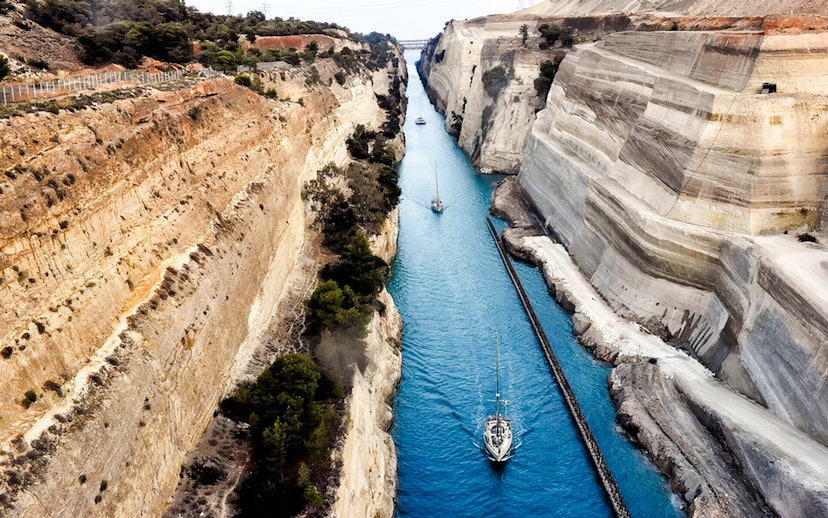
From Athens: Mycenae, Epidaurus, Nafplio & Corinth Canal Guided Day Trip | Archaeological site + museum + Treasury of Atreus | A self-paced visit where you’re driving yourself or staying nearby and don’t need transport built in | From €25.38 |
Nafplio-Mycenae-Epidaurus Day Tour from Athens | Mycenae + Tiryns + Palamidi Fortress + Archaeological Museum of Nafplio + Byzantine Museum of Argos + other included regional sites | A regional stay where you want to explore several Argolis sights peacefully instead of doing one rushed loop | From €25.38 |
Mycenae Archaeological Site & Museum Entry Ticket with Audio Guide | Round-trip transport + guide + Mycenae + usually Epidaurus + Nafplio | A day trip from Athens where hassle-free transport matters more than having maximum free time at each stop | From €26 |
From Athens: Mycenae, Nafplio & Corinth Canal Premium Guided Tour | Private car + driver or guide + flexible stops + hotel pickup | A flexible visit where you want an early start, slower pacing, or room to adapt for children or older adults | From €59 |
How do you get around Mycenae Archaeological Site?
Site layout
Mycenae is best explored on foot, and most visitors cover the main route in 1.5–2 hours, or a little longer if they add the museum and Treasury of Atreus slowly. The citadel rises uphill from the entrance, so the key focal point is above you from the moment you pass the Lion Gate.
- Entrance and Lion Gate: The dramatic gateway into the citadel → first photo stop and orientation point → allow 10–15 minutes.
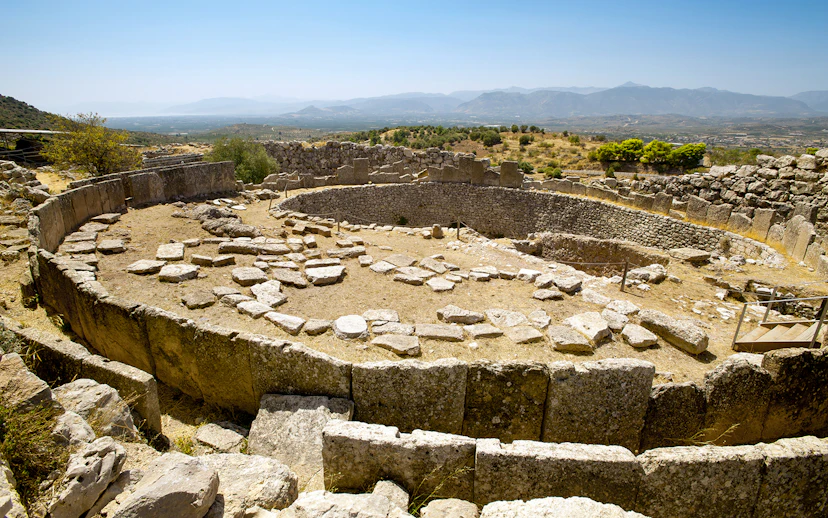
- Grave Circle A: Just inside the gate → royal shaft graves and key context for Schliemann’s finds → allow 5–10 minutes.
- Upper citadel and palace area: Summit ruins and best views across the Argive plain → the most physically demanding stretch → allow 20–30 minutes.
- Underground cistern: Steep stone descent into the rock-cut water system → easy to skip if you’re moving quickly → allow 10 minutes.
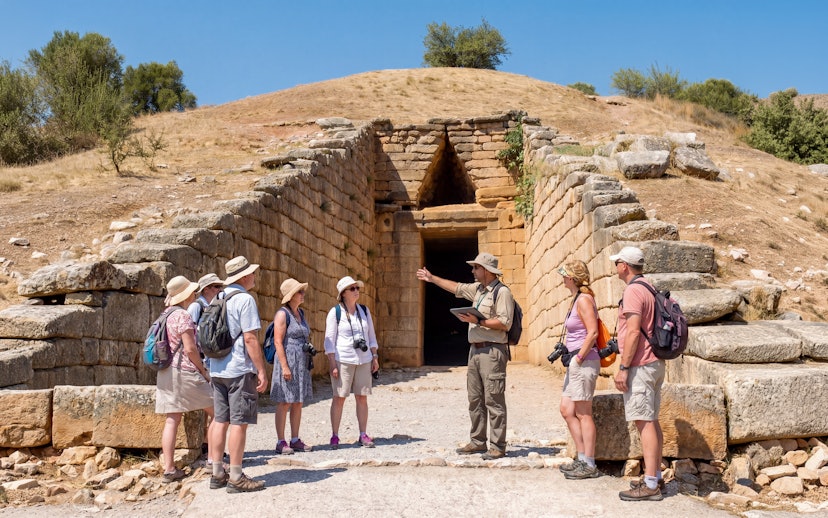
- Treasury of Atreus: Outside the main citadel near the approach road → monumental beehive tomb with the strongest sense of scale → allow 10–15 minutes.
Suggested route: Start with the citadel before the heat builds, do the summit and cistern while you still have energy, then cool down in the museum and finish with the Treasury of Atreus on your way out.
Maps and navigation tools
- Map: Download a site map before arrival → you’ll want the citadel, museum, and Treasury of Atreus on one view → get it before you leave Athens or Nafplio.
- Signage: Wayfinding is enough to keep you moving, but it isn’t detailed enough to explain why the ruins matter, so a downloaded map or guide helps a lot.
- Audio guide / app: No official on-site Audioguide is provided → a downloaded guide app adds real value here → use one if you’re visiting without a live guide.
- Large outdoor POIs only: Offline maps are useful if you’re self-driving around Argolis → they make it easier to pair Mycenae with Tiryns or Nafplio without wasting time backtracking.
💡 Pro tip: Do the museum after the hill, not before it. The air-conditioned galleries make much more sense once you’ve seen the walls, graves, and palace foundations outside.
What is Mycenae Archaeological Site worth visiting for?

Lion Gate
Era: 13th century BC
This is the symbolic entrance to Mycenae and the site’s most recognizable image, with two carved lionesses above the massive lintel. It’s worth slowing down because it isn’t just photogenic; it marks the threshold into one of the most powerful citadels of Bronze Age Greece. Most visitors stop for a quick photo and miss how narrow the passage is, which makes it easy to picture how controlled and ceremonial entry once felt.
Where to find it: At the main entrance to the citadel, a short walk uphill from the ticket office.
Cyclopean walls
Architecture: Fortification masonry
The walls are one of the site’s biggest shocks in person because the stone blocks are much larger than most visitors expect. They matter not only as fortifications, but as proof of the scale and ambition of Mycenaean engineering. What people rush past is the view outward from the upper stretches, looking across the plain explains exactly why this hill was such a powerful defensive position.
Where to find it: Running along the uphill route from the Lion Gate toward the summit and palace area.
Grave Circle A
Archaeology: Royal shaft graves
This enclosed grave circle is where Heinrich Schliemann uncovered the gold finds that made Mycenae famous again in the 19th century. It can look underwhelming if you only glance at the stone ring, but this is one of the most important spots on the site for understanding Mycenae’s wealth and elite burials. Most people miss the interpretive panels that explain what was actually found here.
Where to find it: Immediately inside the Lion Gate, slightly off to the right.
Underground cistern
Function: Water system
The cistern is easy to skip, which is exactly why you shouldn’t. A steep staircase cuts down through the rock to a concealed water source, showing how seriously Mycenae treated siege survival and self-sufficiency. What many visitors miss is how atmospheric the descent becomes; it’s one of the few parts of the site that still feels enclosed, dark, and physically dramatic rather than ruinous.
Where to find it: Off the upper citadel route, reached by a marked stairway near the summit area.
Treasury of Atreus
Tomb type: Tholos tomb
This beehive-shaped tomb sits outside the main citadel and feels entirely different from the fortress itself. It is quieter, darker, and more architectural than scenic. The scale of the corbelled interior is what makes it memorable, especially once you stand beneath the dome and realize how early it was built. Most visitors take the doorway photo and leave too fast; the interior acoustics and stonework are the real reason to linger.
Where to find it: Along the approach road near the parking area, a short walk from the main entrance.
Archaeological Museum of Mycenae
Collection type: Site museum
The museum is where the ruins stop feeling abstract. Pottery, tools, tablets, fresco fragments, and burial objects connect the walls outside to actual daily life, trade, and ritual. Visitors often rush it because the building looks small, but the displays do the heavy lifting in explaining what the palace, tombs, and graves once meant. It’s also the smartest place to recover after the uphill walk.
Where to find it: Beside the entrance and ticket area, before you enter or after you exit the citadel.
Facilities and accessibility
- 🎟️ Entrance area: The ticket office, museum, café, gift shop, and restrooms are all grouped near the main entrance, which makes it easy to get organized before you start uphill.
- 🚻 Restrooms: The main restrooms are by the parking and entrance area, so it’s smarter to use them before heading into the citadel.
- 🍽️ Café: There is a small on-site café near the entrance for drinks, snacks, and a quick cool-down, but it works better as a convenience stop than a full lunch.
- 🛍️ Gift shop / merchandise: The entrance shop is the obvious place for guidebooks, postcards, and basic souvenirs tied to the site and museum.
- 🅿️ Parking: Visitor parking is free and close to the entrance, which is one reason self-driving works well here.
- 🏛️ Museum: The on-site museum is air-conditioned and included with admission, making it the most comfortable break point on hot days.
- 🪑 Seating / rest areas: The easiest place to sit and regroup is around the entrance complex and museum rather than inside the exposed citadel route.
- ♿ Mobility: The museum is accessible, but the main archaeological route is not fully accessible because the paths are uphill, uneven, and stepped; visitors with limited mobility usually find the lower area far easier than the summit.
- 👁️ Visual impairments: The site is navigable with assistance, but interpretation at the ruins is limited, so a companion or downloaded audio guide adds much more than the signs alone.
- 🧠 Cognitive and sensory needs: The calmest experience is at opening time or in shoulder season, because mid-morning group arrivals make the Lion Gate and upper path feel busier and less easy to process.
- 👨👩👧 Families and strollers: Strollers struggle on the rough, uphill terrain, so a baby carrier is usually the easier option for younger children; the museum and entrance area are the easiest parts for families to manage.
- 🪨 Terrain: Expect dirt paths, uneven stone, and a moderate uphill climb rather than smooth paving from end to end.
- 🕐 Time: Around 60–90 minutes is realistic with younger children if you focus on the Lion Gate, the biggest walls, the view, and a short museum stop.
- 🏠 Facilities: The restrooms, café, parking, and museum all being near the entrance makes breaks much easier than at larger archaeological parks.
- 💡 Engagement: Frame the visit around heroes, tombs, and fortress walls rather than dates first, because children usually respond faster to the Agamemnon story than to archaeology labels.
- 🎒 Logistics: Bring sun hats, water, and better shoes than you think you need, and avoid the hottest midday window if you want the uphill section to stay manageable.
- 📍 After your visit: Nafplio is the easiest follow-up stop for families, with a waterfront walk, ice cream, and room to decompress after the ruins.
Rules and restrictions
What you need to know before you go
- Entry requirement: One standard admission ticket covers the archaeological site, the museum, and the Treasury of Atreus, and discounted or free entry categories may require ID for verification.
- Bag policy: Small bags are the easiest fit here, because the route is steep, there is no confirmed cloakroom, and bulky backpacks quickly become annoying on uneven stone.
- Re-entry policy: Re-entry is not permitted after you exit, so finish the museum, restrooms, and café in one sequence instead of planning to pop back in later.
Not allowed
- Climbing or touching ruins: Don’t climb on walls, masonry, or roped-off areas, because the remains are fragile and the surfaces are uneven underfoot.
- Risky footwear choices: Flip-flops and slippery soles aren’t banned at the gate, but they are one of the fastest ways to make the uphill route harder than it needs to be.
Photography
- Personal photography is one of the pleasures of visiting Mycenae, especially at the Lion Gate, along the walls, and inside the Treasury of Atreus.
- The practical distinction is space rather than a long list of restricted rooms: the narrow approach points clog easily, so large setups are a poor fit even when handheld photos are easy.
- Most museum exhibits can also be photographed, and early light gives you the cleanest shots outside.
Good to know
- Free-entry days: First and third Sundays from November to March can be much busier than the season normally feels, because locals take advantage of free admission.
- Closing rule: Last entry is 30 minutes before closing, which matters more than people expect because you still need time for the uphill route once you’re inside.
Practical tips
- Booking and arrival: You can usually buy tickets at the gate, but if you’re visiting in July–September and want a small-group or private Athens day trip, book a few days ahead instead of assuming the best option will still be open.
- Pacing: Don’t burn energy at the entrance taking too many photos before you’ve climbed the site — the upper citadel and cistern are the parts that feel longest in the heat.
- Crowd management: The best slot is right at opening, because you’ll reach the Lion Gate before the tour buses and do the uphill stretch while the stone is still cool enough to walk comfortably.
- What to bring or leave behind: Bring water, a hat, and shoes with grip; the site is exposed, and the rough stone steps punish sandals faster than visitors expect.
- Food and drink: Use the on-site café for a cold drink, not a full meal plan; if you want lunch that feels like part of the day rather than a stopgap, eat after the visit in Nafplio.
- Context: If you’re not taking a guide, download an Audioguide or read up before arrival, because the difference between ‘interesting ruins’ and a memorable visit here is understanding what you’re actually looking at.
What else is worth visiting nearby?
Commonly paired: Epidaurus
Distance: 60km (37 miles) — about 1 hour by car
Why people combine them: It balances Mycenae’s fortress-and-tombs feel with one of Greece’s best-preserved theaters, so the day gives you two very different ancient sites rather than more of the same.
Commonly paired: Nafplio
Distance: 22km (13.7 miles) — about 25 minutes by car
Why people combine them: Nafplio is the natural lunch and decompression stop after the ruins, and its harbor setting, old town streets, and fortress views make the day feel less archaeological and more rounded.
Eat, shop and stay near Mycenae Archaeological Site
On-site: The entrance café handles drinks, coffee, and simple snacks, and it’s useful for a quick reset but not a destination meal.
Other places nearby:
- Mykines village tavernas (5-min drive, Mykines village): Simple grilled dishes and salads, and the most practical option if you want to eat quickly without driving farther.
- Nafplio old town cafés (25-min drive, Syntagma Square area): Best for coffee, pastries, and a slower post-visit break once you’re done with the heat.
- Nafplio waterfront restaurants (25-min drive, harbor area): Better for a full sit-down lunch, especially if you want seafood or a longer stop after the ruins.
- Mycenae gift shop: Books, postcards, and straightforward site souvenirs right by the entrance, and the easiest place to buy something without adding a detour.
- Nafplio old town shops: Better for olive-wood items, ceramics, and gifts that feel less generic than entrance-shop souvenirs.
- Price point: The immediate Mycenae area is limited and practical, while Nafplio has a much wider mid-range and boutique stay mix.
- Best for: Visitors who want to see Mycenae early without returning to Athens the same day should stay in Nafplio rather than beside the ruins.
- Consider instead: Nafplio for atmosphere and dining, or Athens if you only want Mycenae as a one-day add-on and don’t mind a longer round trip.
Frequently asked questions about visiting Mycenae Archaeological Site
Most visits take 1.5–2 hours. That usually covers the citadel, the museum, and the Treasury of Atreus, though history-focused visitors can easily stretch it to 2.5 hours if they use a guide or spend more time at the summit and in the museum.
No, you usually don’t need to book the site ticket far in advance. Most people can buy at the entrance with only a short wait, but guided day trips from Athens, especially small-group or private ones in summer, are worth locking in a few days earlier.
You don’t need to plan around a strict timed slot, because entry is generally rolling rather than timeslot-based. The smarter move is arriving right at opening or after about 3pm, when the Lion Gate is less likely to be backed up by mid-morning group arrivals.
Yes, a small backpack is fine and usually the most practical choice. The real issue is comfort rather than access; the paths are steep, uneven, and exposed, and there is no confirmed cloakroom, so large or heavy bags make the visit harder than it needs to be.
Yes, personal photography is part of the experience at both the ruins and most of the museum. The only real limitation is space and timing, because the Lion Gate and Treasury of Atreus are narrow enough that crowds can make longer photo stops awkward.
Yes, Mycenae is very commonly visited as part of a group, especially on full-day tours from Athens. That said, group visits can feel rushed, so if Mycenae is the main reason you’re going, a self-drive day or private tour gives you much more control over pacing.
Yes, if your children can handle heat, uneven ground, and a bit of uphill walking. The visit is short enough for most families, and the stories of kings, tombs, and fortress walls usually land better with kids than the more abstract archaeology labels do.
Partly. The museum is accessible, and the lower part of the site is easier to manage, but the main citadel route involves uneven surfaces, stone steps, and a steady incline that makes full access difficult.
Yes, there’s a small café by the entrance for drinks and light snacks. For a proper meal, most visitors are better off continuing to Nafplio or stopping in the nearby village after the site rather than treating the entrance café as their lunch plan.
The best time is the first hour after opening. You’ll avoid the worst heat, get cleaner photos at the Lion Gate, and stay ahead of the mid-morning bus arrivals that make the narrowest parts of the route feel busier than the rest of the site.
Yes, and that’s one of the most common ways to do the region. It works best if you leave early, keep each stop focused, and accept that you’re choosing breadth over depth, because a combined day does not leave endless time at either site.