Quick Information

RECOMMENDED DURATION

4 hours

VISITORS PER YEAR

200000

EXPECTED WAIT TIME - STANDARD

30-60 mins (Peak), 0-30 mins (Off Peak)

Plan your visit

Did you know?

King Aegeus, father of Theseus is believed to have plunged to his death from the cliff here. After killing the minotaur, Thesaus' ship returned with black sails, which implied he was killed, (which was not the case). A heartbroken King couldn’t take it and jumped from the cliff to his death. The Athenians named the Aegean Sea after this mighty King and loving father.

The Temple was built to honor Poseidon, the god of the sea. In fact, inside the temple stood a 20-foot bronze statue of Poseidon, surviving in parts and preserved in the Archeological Museum of Athens. Being a seafaring nation, Athens had incredible faith in Poseidon and built the temple right near the sea and appeased him with offerings to keep them safe while at sea.

In 1884, German archeologist Wilhelm Dorpfeld discovered that the current temple stood on top of an archaic temple of similar dimensions. It is believed that this archaic temple was razed to the ground by Persians in 480 BC while still under construction. In 479 BC, when the Greeks defeated the Persians, they placed the captured Persian warships at Sounion, as a trophy for Poseidon.

The Temple of Poseidon at Cape Sounion
Religious significance
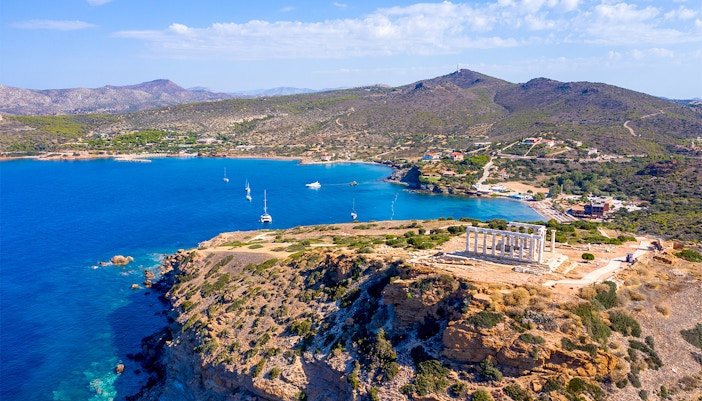
The 5th century BCE Temple of Poseidon is the crown jewel of Cape Sounion. Ancient Greeks worshipped the sea god Poseidon for safety and fortune on long sea voyages. They believed storms were a sign of his wrath. So, before heading out to sea, they offered sacrifices and gifts at this temple, and prayed for his favor and protection.

Strategic importance

The fortifications at Cape Sounion were an integral part of ancient Athens’ strategic coastal defences. Positioned on the headland, the Temple of Poseidon commanded unobstructed views of the Aegean Sea around the Attican peninsula and served as a lookout point to track ships. Its tall white marble columns also marked the entrance to Athens’ harbor and served as a navigational landmark for sailors returning home.
Highlights

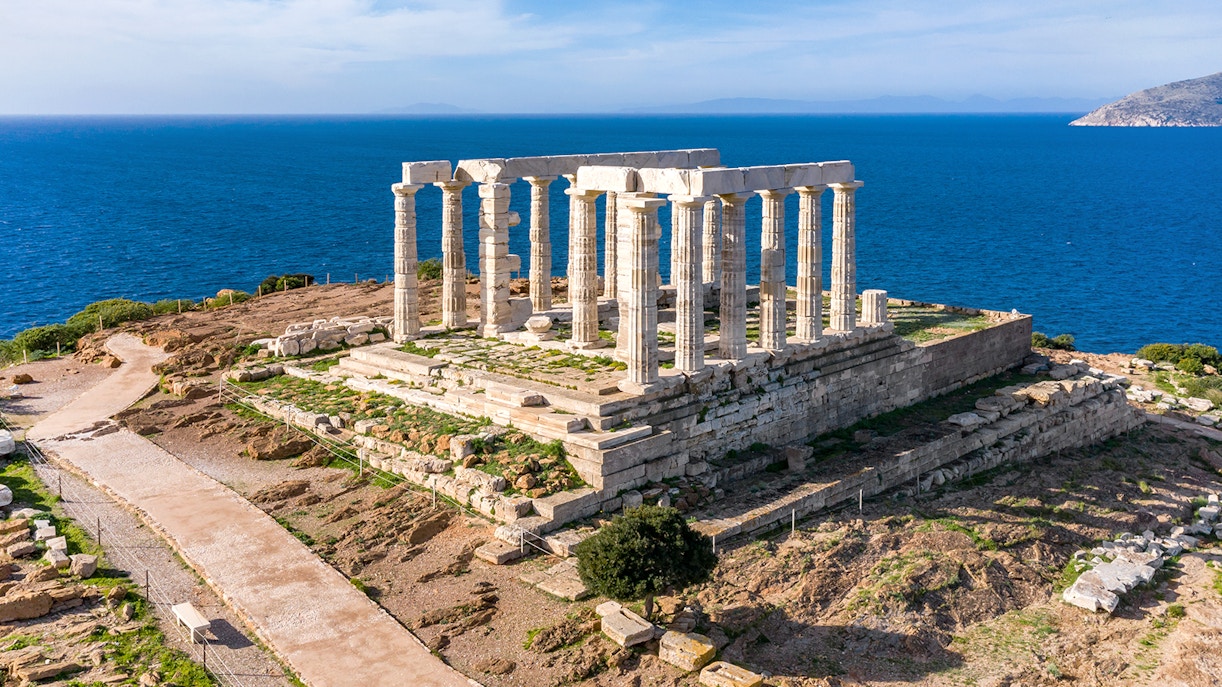
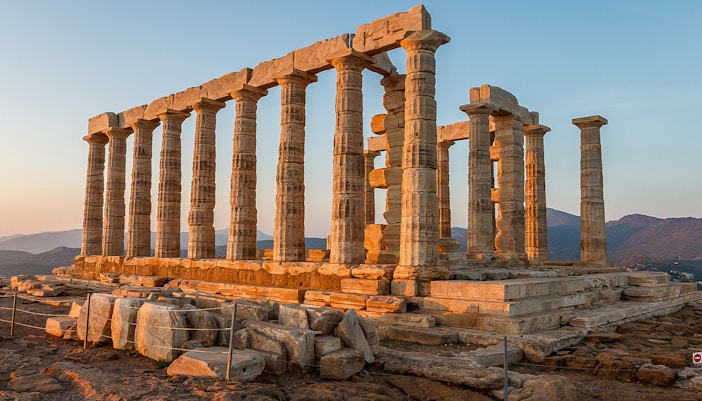
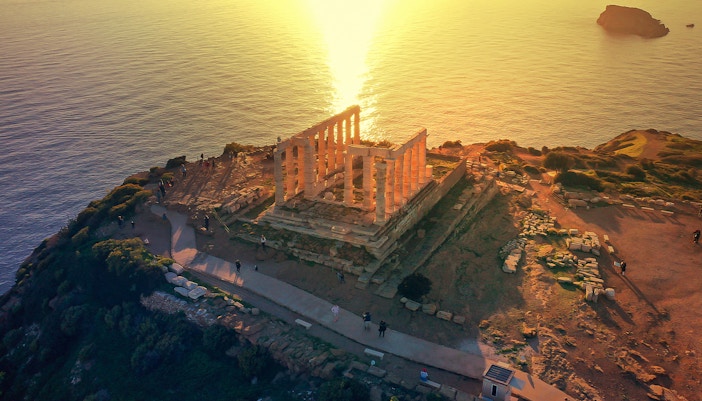
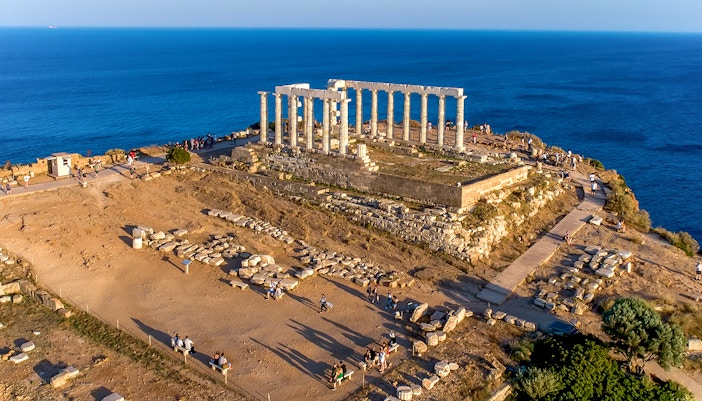
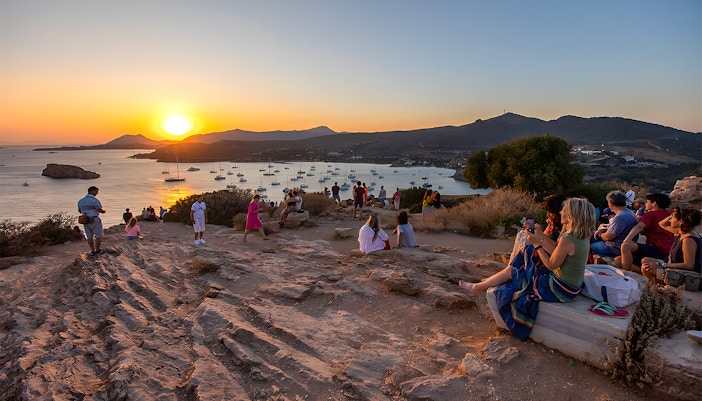
Although much of the Temple of Poseidon is in ruins today, some of its ancient structure and 15 of the original 34 Doric columns remain. Despite being weathered over the centuries, it is as imposing today as it was 2,500 years ago. It makes for an unforgettable sight at sunset, with the marble columns lit up by the warm orange, pink, and purple hues of the evening sky.
What to see at the archaeological site of Sounion?

Temple of Athena Sounias

Built in the 6th century BCE, this was a smaller temple honoring Athena, the Greek goddess of wisdom and warfare. It was constructed on a low hill just a short distance from the Temple of Poseidon. It might seem unusual to have temples dedicated to two powerful gods in such close proximity. However, religion in ancient Greece was polytheistic, and people worshipped multiple gods based on their needs and preferences.

Temple of Athena Sounion

Sounio Beach

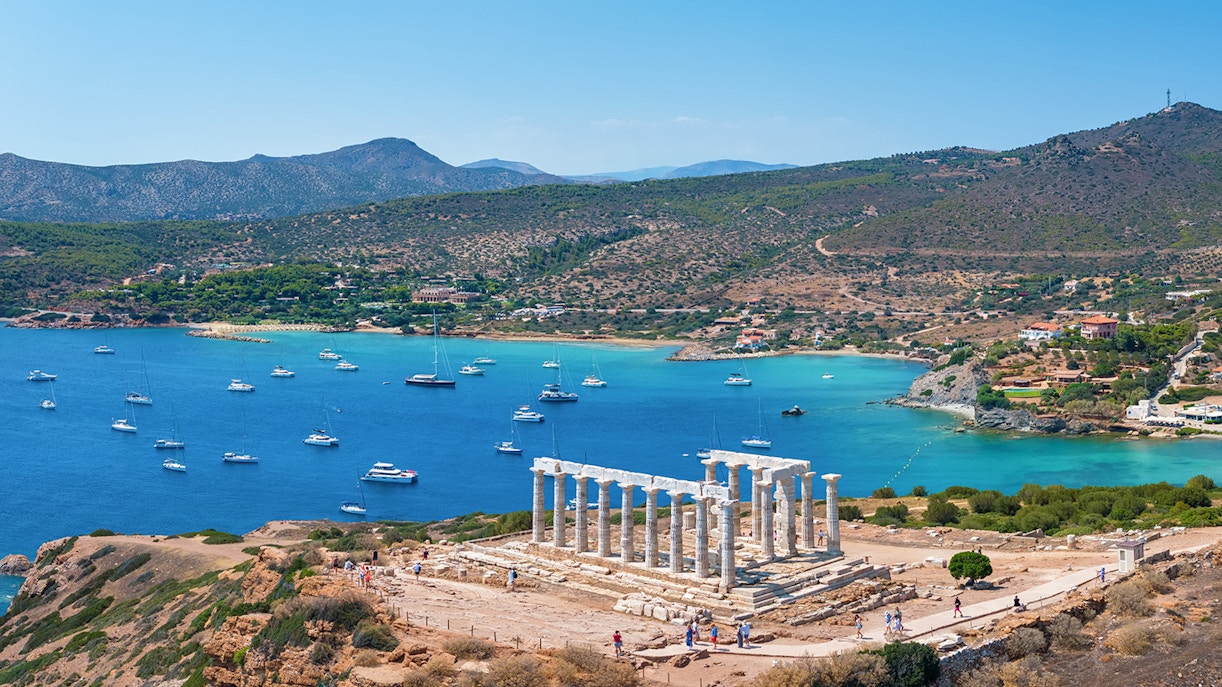
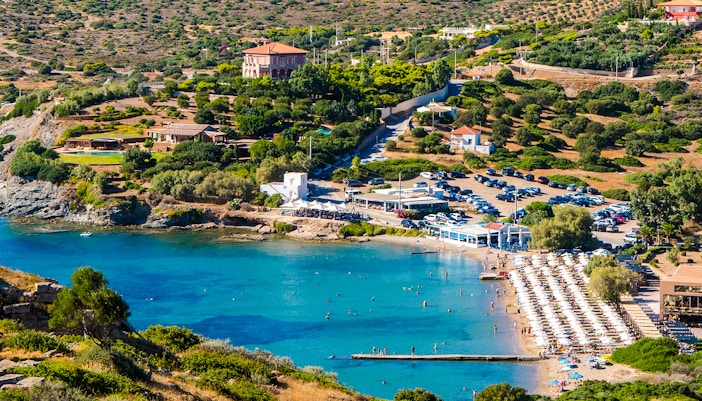
One of the best things about Cape Sounion is that you can combine history, culture, and beaches in one trip. Sounio Beach, located just down the hill from the Temple of Poseidon, is one of the Athens Riviera’s best spots for sun, sand, and swimming. Relax by the shore, go snorkeling in the clear waters, and grab a delicious seafood meal at one of the beachside tavernas. And you’ll be able to catch some of the best views of the temple perched above.

Ancient settlements of Cape Sounion

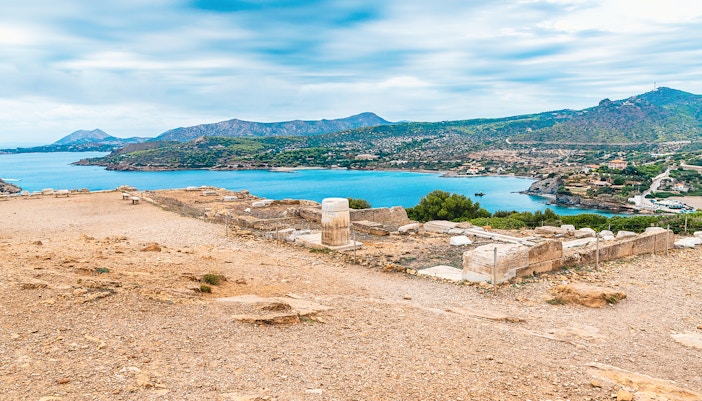
Humans have settled in Cape Sounion for centuries, dating all the way back to the Bronze Age. Artefacts from the site go as far back as the 7th century BCE. In the 6th and 5th centuries BCE, the ancient Greeks built fortifications to protect the city-state of Athens and its maritime trade. Today, you can still see some of the remnants of the walls, temples, and ancient structures that stood here thousands of years ago.

History of the Temple of Poseidon

  • 6th century BCE: The first temple dedicated to the sea god Poseidon is erected, only to be destroyed during the Persian invasion around 480 BC. 
  • 5th century BCE: Under the Athenian statesman Pericles, reconstruction begins. A new Temple of Poseidon is built in the Doric style, featuring around 34 columns, on the same site. 
  • 4th century BCE: The temple functions not just as an active site of worship, but also as a lookout point as part of the ancient defensive fortifications. 
  • Around 323 BCE: Throughout the Hellenistic and Roman periods, the temple continues to gain prosperity, and attract more and more followers. 
  • 1st to 3rd century AD: With the rise of Christianity and the decline of Pagan worship, the Temple of Poseidon is slowly abandoned.
  • 18th & 19th century: The temple is re-discovered by European travelers, who begin documenting their journeys to Cape Sounion. 
  • Late 20th century: The Greek Archaeological Society restores a portion of the archaeological site of Cape Sounion. A few sections of Poseidon’s Temple are also restored. By the turn of the century, it begins to attract the attention of tourists. 
  • Present day: Today, the Temple of Poseidon is an ancient landmark, protected by the Greek Ministry of Culture. Thousands of visitors flock to the temple every year to explore the ruins and admire the sunset views over the Aegean Sea.

Plan your visit to Cape Sounion and the Temple of Poseidon

Who built the Temple of Poseidon?

It is not known who built the first structure of the Temple of Poseidon. During the 5th century Greco-Persian wars, the original structure was destroyed around 480 BCE. In around 444 BCE, the Athenian statesman Pericles sought to restore this temple. The construction began in 444 BCE and was completed in 440 BCE.

It is believed the second Temple of Poseidon was built by the same architect who designed the Temple of Hephaestus at the Ancient Agora in Athens.

Temple of Poseidon architecture

Temple of Poseidon Architecture
  • Agrileza marble: The Temple of Poseidon was built of white marble quarried from the Agrileza mines near Cape Sounion. The same marble was also used in the construction of the nearby Temple of Athena, which was later demolished.
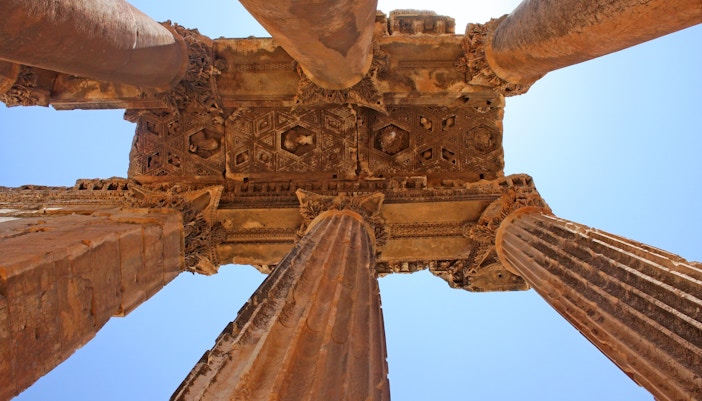
  • Doric columns: Like most temples constructed during the Classical period of ancient Greece, Poseidon’s Temple also featured Doric columns. These columns had a sturdy build, with a fluted shaft, and were slimmer than the typical Doric pillars. Only 15 of original 34 columns are still standing today. 
  • Peripteral design: The temple displays a peripteral design, meaning it features single columns on all 4 corners. It also has rows of pillars along the four sides, called a colonnade. This design, combined with the slim and tall columns, let in more light into the structure, making the interiors look airier and more spacious. 
  • Stylobate: Like most important buildings in ancient Greece, you’ll notice that the temple is constructed on a raised platform, called the stylobate. This distinction was made to separate its base from other structures in the area.
Temple of Poseidon Representation in Popular Culture

If you are a millennial or younger, chances are you’ll have heard of Poseidon and his temple from the Percy Jackson books. Here’s where else this landmark has featured over the centuries:

  • Lord Byron’s ‘Isle of Greece’: The 19th century English poet Lord Byron raved about the stunning beauty of Cape Sounion in one of his poems. He described the temple ruins, how it opens into the Aegean Sea, and how the light of the setting sun casts a beautiful glow on the surface of the sea. It is also rumored that when he visited Cape Sounion, he etched his initials on one of the temple’s columns. 
  • Homer’s Odyssey: In Greek mythology, the Temple of Poseidon and Cape Sounion are also remembered as the site where Aegeus, the king of Athens, jumped to his death after mistakenly believing his son, Theseus, had died. Theseus returned after killing the Minotaur, but forgot to change the sails on his ship from black to white to signal his victory. Mistaking the black sails as a sign that his son had passed away, Aegeus chose to end his life. 
  • Assassin’s Creed: Odyssey: In this popular video game, the Temple of Poseidon is a notable location that aids players in fulfilling their quests. Players can delve into ancient Greek stories and immerse themselves in this game’s almost realistic simulation of Cape Sounion.
Best time to visit the Temple of Poseidon

Frequently asked questions about the Temple of Poseidon

You need to book Temple of Poseidon tickets to enter the site of the ruins at Cape Sounion. It’s best to book your tickets online in advance.

More reads

Temple of Poseidon photos

Book Now

Day tours to Temple of Poseidon from Athens

Book Now

Visit Cape Sounion & the Temple of Poseidon

Book Now