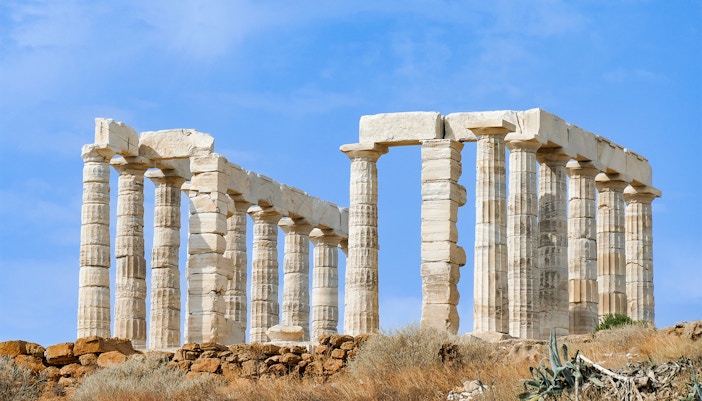
The temple follows the Doric order, one of the three classical styles of ancient Greek architecture. Doric temples are known for their plain, cushion-like capitals atop fluted columns and a strong structure without excessive ornamentation.
Temple of Poseidon Architecture | Doric Columns & Ancient Facades
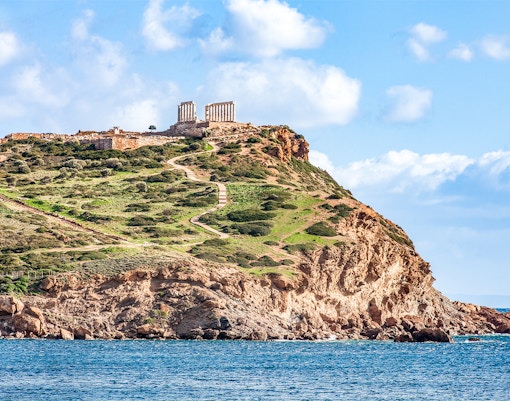
The Temple of Poseidon at Cape Sounion is a prime example of Classical Doric architecture from the mid-5th century BCE, dedicated to the Greek God of the sea. Built on a cliff above the Aegean Sea, its surviving metopes once depicted mythological scenes. The design includes entasis for visual correction and precise alignment with the sea horizon.
Architectural details of Temple of Poseidon
Architectural style and order
Materials and construction techniques
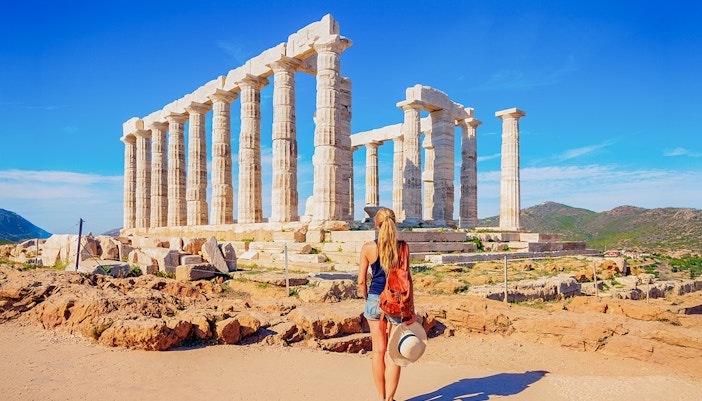
Local white marble from the nearby Agrilesa quarries was used in the temple’s construction. The columns were made by stacking cylindrical stone blocks called drums and securing them with metal dowels. Craftsmen carved the flutes and details on-site with precise alignment and spacing, showcasing the advanced engineering skills of the time.
Column design and layout
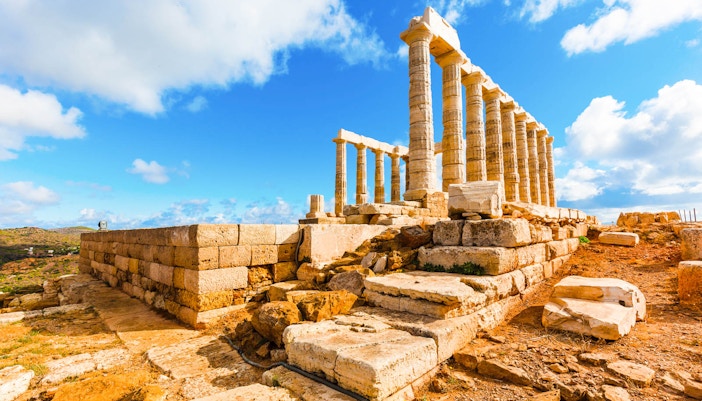
The original structure featured 34 Doric columns arranged in a single row, surrounding the central chamber or cella on all four sides. The layout was 6 columns wide and 13 columns long. Each column stands about 6 meters tall with 16 vertical flutes. The subtle bulge in the middle of the columns, known as entasis, corrects optical illusions and makes them appear straight from a distance.
Sculptural decoration
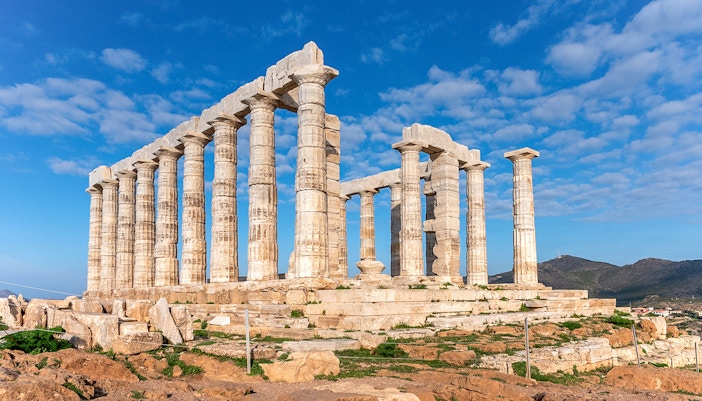
While much of the temple’s decorative sculpture is now lost, it once featured carved friezes and metopes with scenes from Greek mythology. These likely included battles with centaurs and episodes from the life of Theseus—Athens’ legendary hero. Traces of paint found on fragments suggest that the temple was once brightly colored, not the plain white we see today.
Orientation and site integration
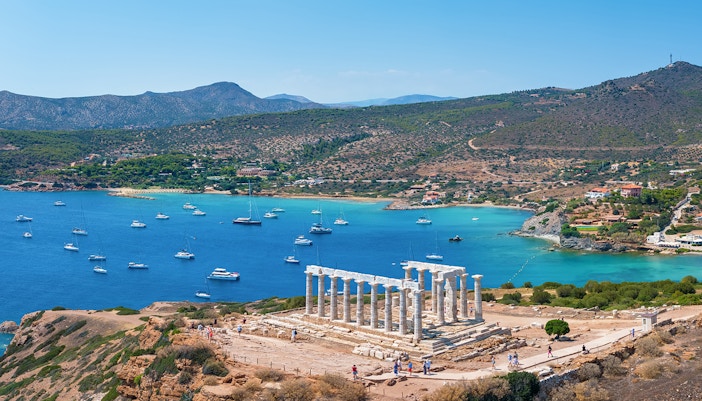
The temple is strategically oriented to face the sea, offering panoramic views over the Aegean. The position chosen was functional as it served as a landmark for ancient mariners navigating toward Piraeus. Some scholars believe its alignment may also correspond with astronomical events, like the setting sun during the summer solstice.
Architectural comparisons and influence
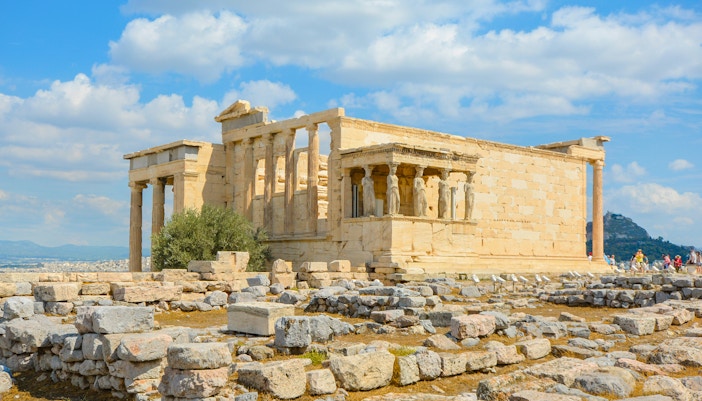
Nearby, the Temple of Athena Sounias stood on a lower terrace. Unlike the Doric Poseidon temple, it used Ionic features and had a different floor plan. The Temple of Poseidon shares similarities with the Temple of Hephaestus in Athens, especially in size and proportion. Its clean design has influenced many neoclassical buildings across Europe and beyond.
What to see at Temple of Poseidon
Double colonnade corners
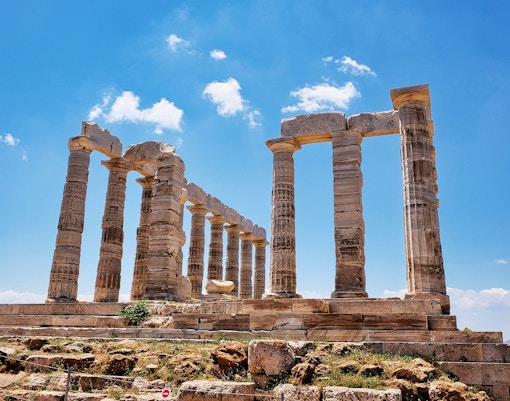
The temple’s corners feature two columns on each side, a detail unique to some Doric temples, enhancing structural strength and symmetry when viewed from multiple angles.
Low stylobate platform
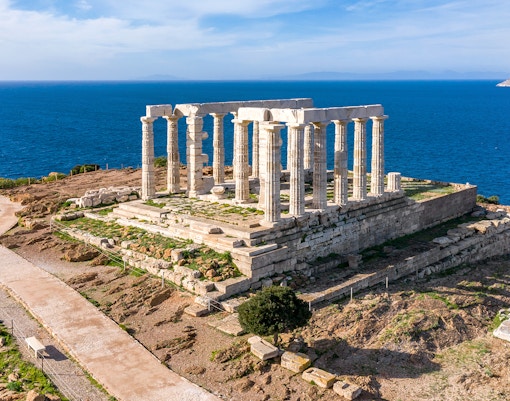
The three-stepped base, or stylobate, is subtly curved to counter optical illusions, making the temple appear perfectly level despite the uneven cliff terrain
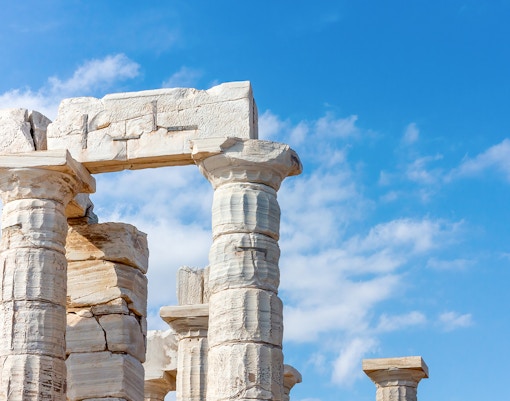
Distinct column fluting
Each column has 16 flutes instead of the more common 20, possibly for faster construction or visual effect, marking a rare variation in Doric design.
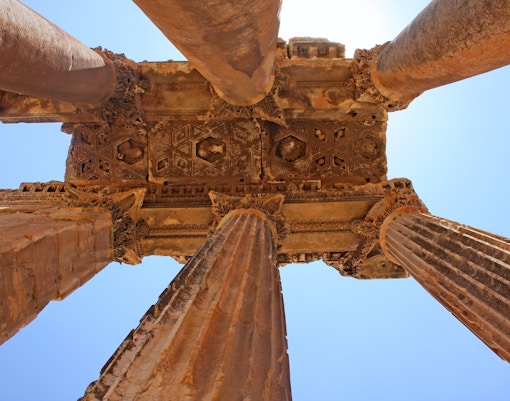
Cuttings for roof beams
Stone grooves and notches still visible at the top of columns and walls reveal how wooden beams once supported the tiled roof.
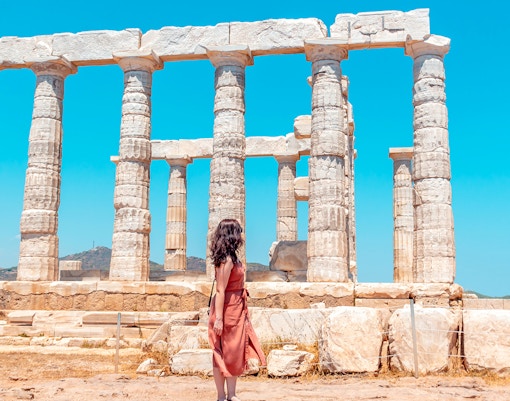
Masonry join marks
Visible clamp and dowel holes between marble blocks show how iron fastenings secured the structure, offering insight into ancient Greek engineering techniques for earthquake resistance.
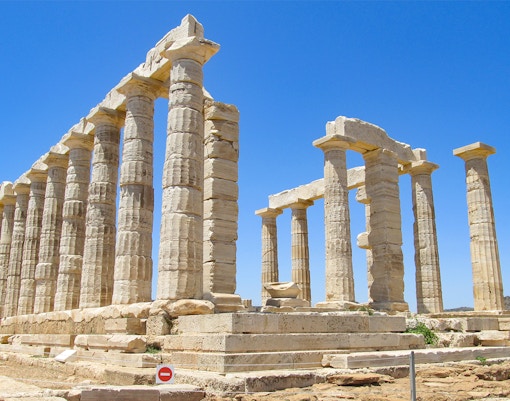
Cella foundation remains
The rectangular inner chamber, or cella, is partly preserved, with traces of the central cult statue’s base still visible, marking the temple's sacred core.
Westward orientation
Unusually, the temple's entrance faces west, possibly aligning with sunset rituals or symbolic views over the Aegean, differing from the typical east-facing Greek temples.
Frequently asked questions about Temple of Poseidon architecture
The temple was built using locally quarried marble from Agrileza, a nearby source chosen for its availability and ease of transport to the cliffside site.
Traces of pigment suggest parts of the frieze and decorative features were once painted, though most color has faded due to centuries of weather exposure.
Wooden beams supported terracotta roof tiles. Cuttings in the marble indicate how the beams were slotted and anchored into place without visible metal reinforcement.
The foundation of the cella still exists, including part of the base where a large statue of Poseidon likely stood at the center of the space.
Yes, small square cuttings in the marble blocks show where metal clamps and dowels were inserted to hold stones tightly together without the use of mortar.


