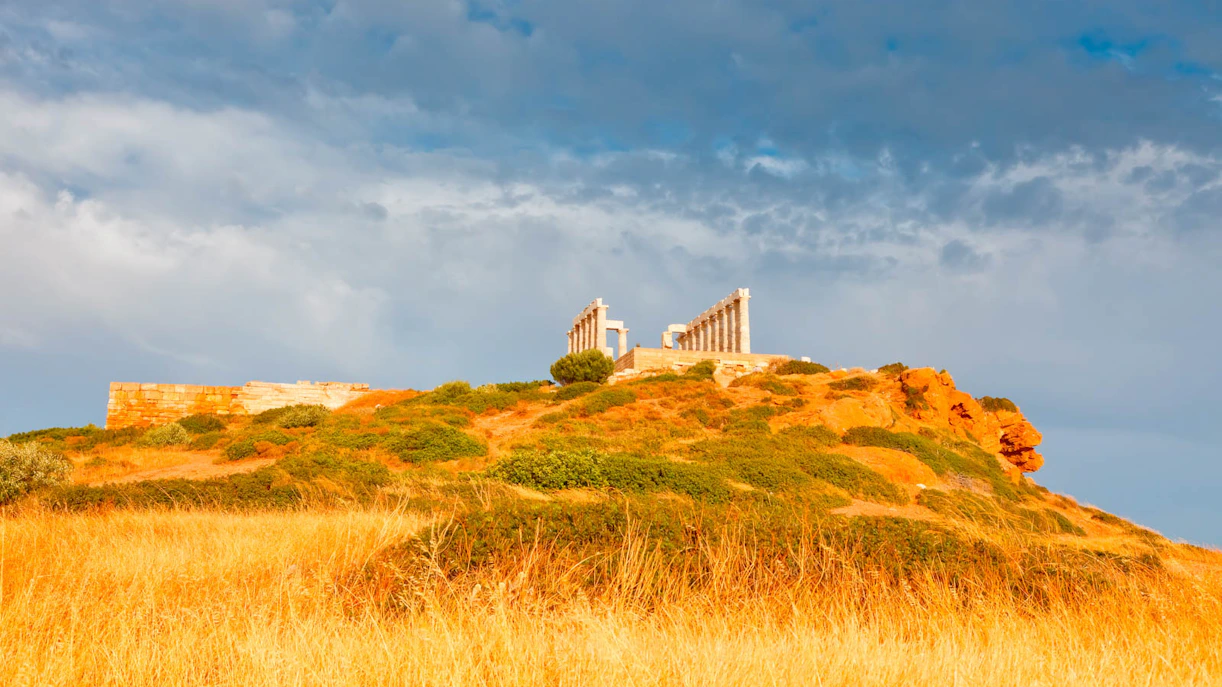
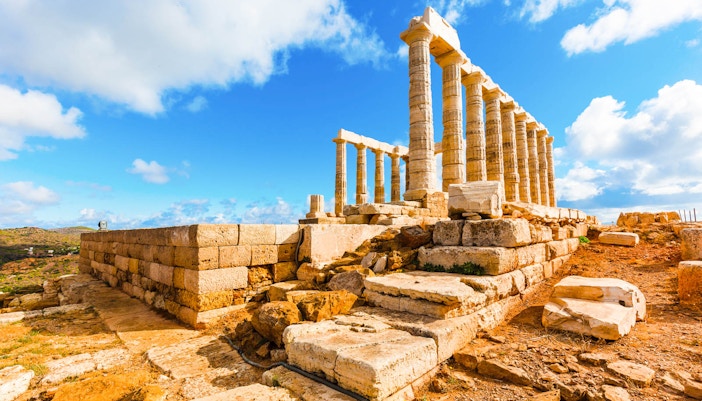
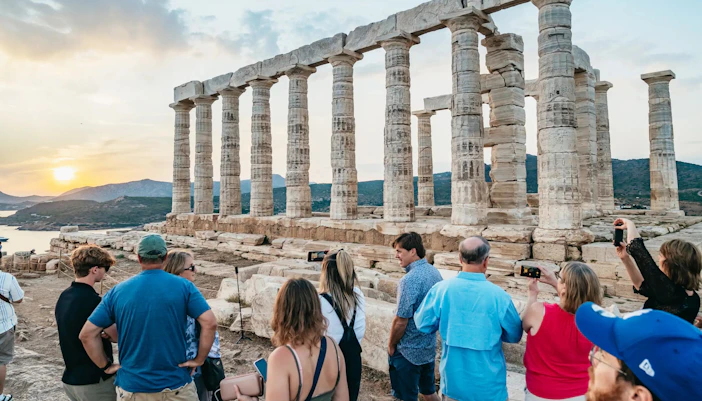
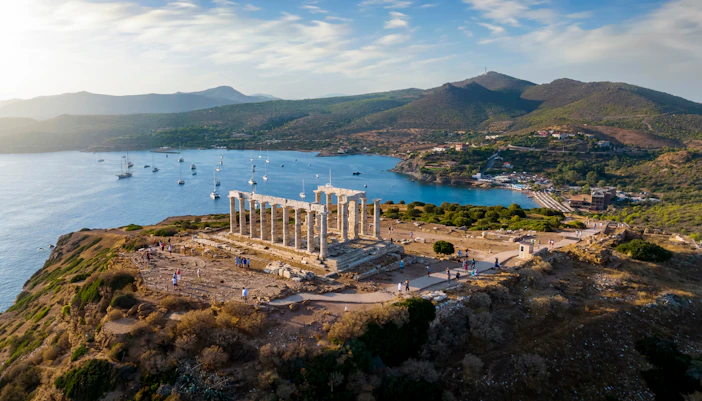
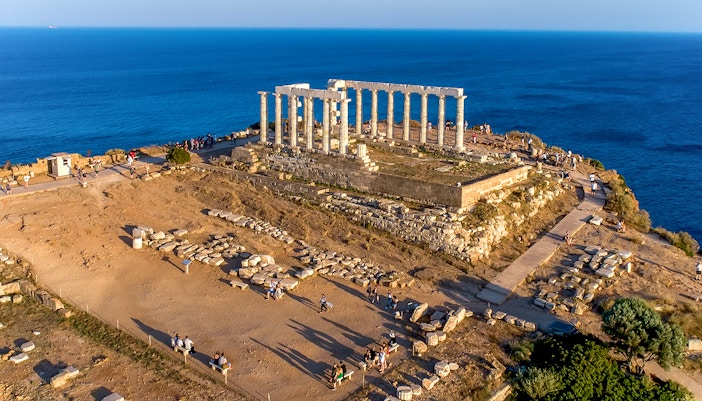
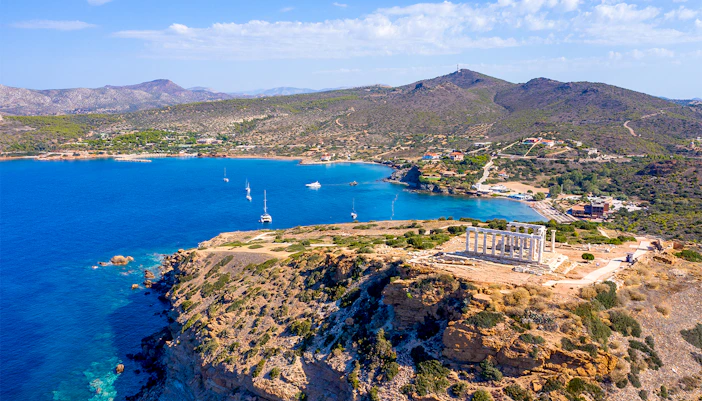
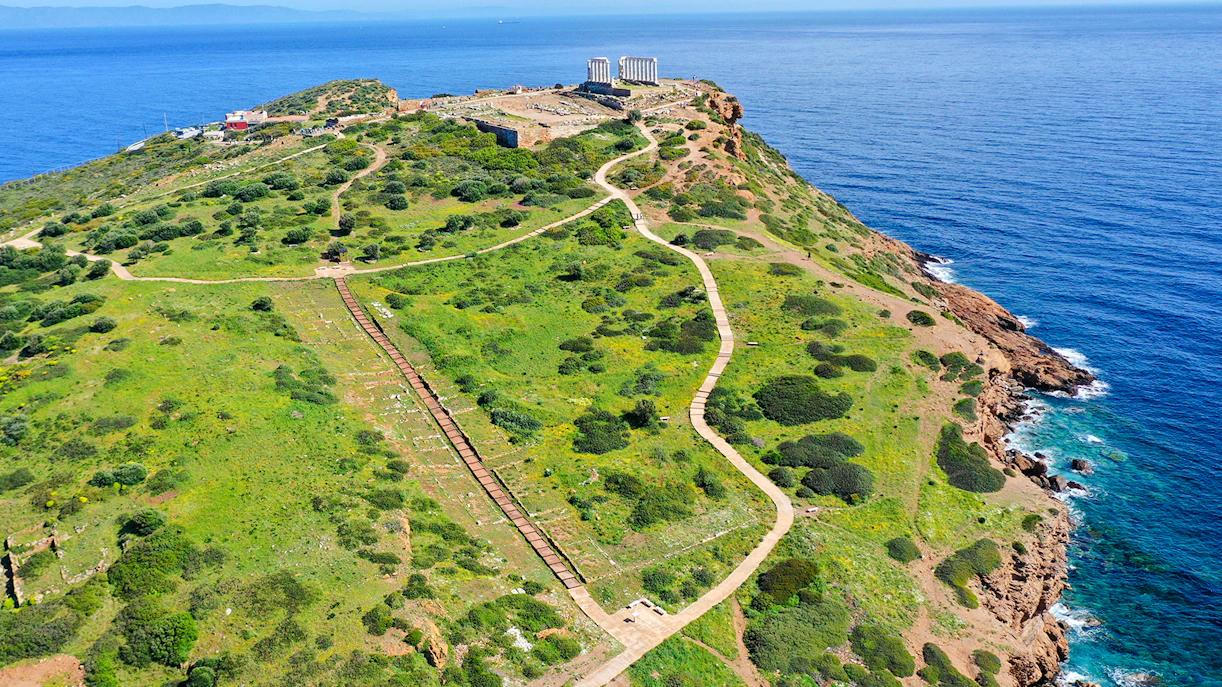
The 5th century BCE Temple of Poseidon is the crown jewel of Cape Sounion. Ancient Greeks worshipped the sea god Poseidon for safety and fortune on long sea voyages. They believed storms were a sign of his wrath. So, before heading out to sea, they offered sacrifices and gifts at this temple, and prayed for his favor and protection.
Quick Information
RECOMMENDED DURATION
4 hours
Timings
09:00–18:30
VISITORS PER YEAR
200000
TICKETS
From $25.57
EXPECTED WAIT TIME - STANDARD
30-60 mins (Peak), 0-30 mins (Off Peak)
Did you know?
King Aegeus, father of Theseus is believed to have plunged to his death from the cliff here. After killing the minotaur, Thesaus' ship returned with black sails, which implied he was killed, (which was not the case). A heartbroken King couldn’t take it and jumped from the cliff to his death. The Athenians named the Aegean Sea after this mighty King and loving father.
The Temple was built to honor Poseidon, the god of the sea. In fact, inside the temple stood a 20-foot bronze statue of Poseidon, surviving in parts and preserved in the Archeological Museum of Athens. Being a seafaring nation, Athens had incredible faith in Poseidon and built the temple right near the sea and appeased him with offerings to keep them safe while at sea.
In 1884, German archeologist Wilhelm Dorpfeld discovered that the current temple stood on top of an archaic temple of similar dimensions. It is believed that this archaic temple was razed to the ground by Persians in 480 BC while still under construction. In 479 BC, when the Greeks defeated the Persians, they placed the captured Persian warships at Sounion, as a trophy for Poseidon.
Quick look at the Temple of Poseidon
What to see at the archaeological site of Sounion?
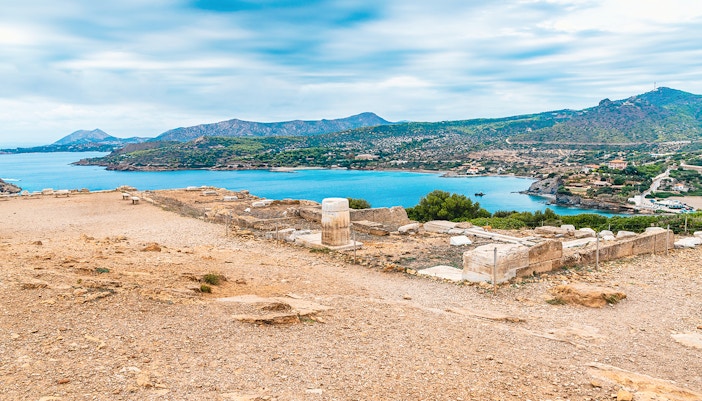
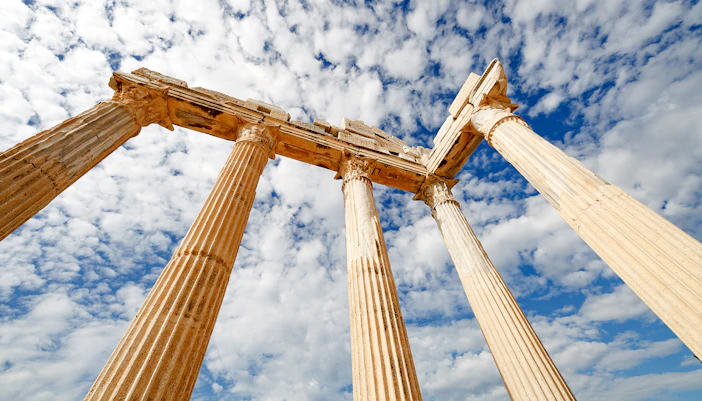
Temple of Poseidon architecture
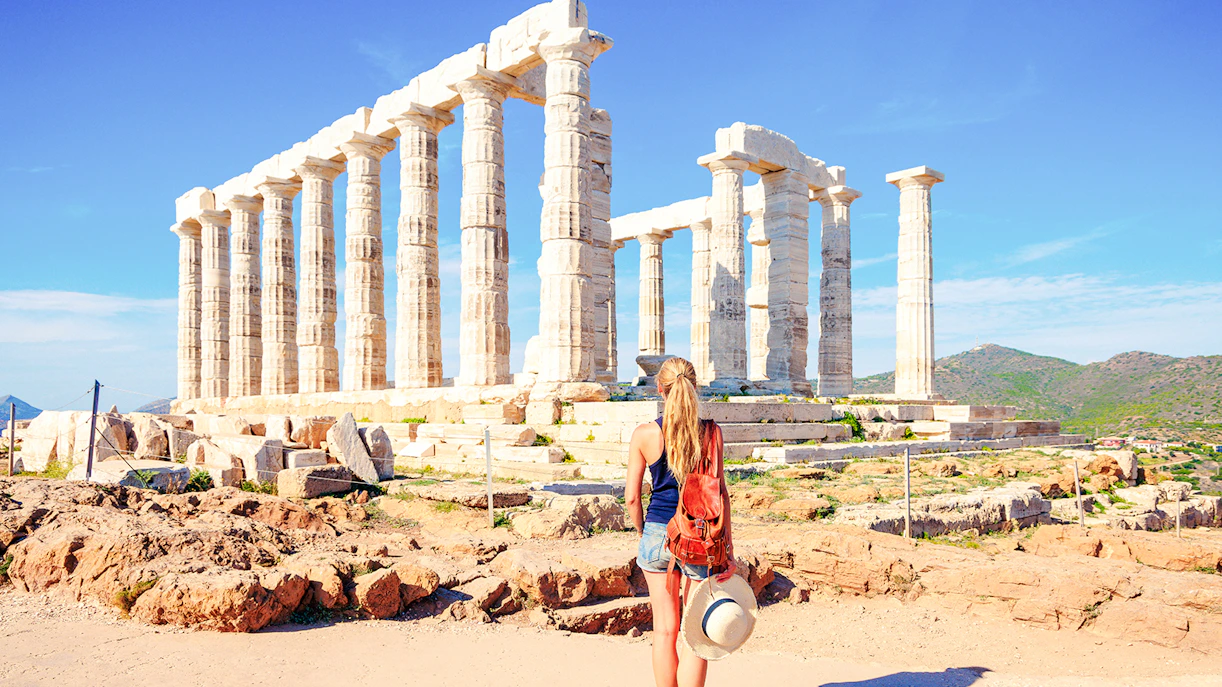
Poseidon’s Temple: Featured in mythology and popular culture
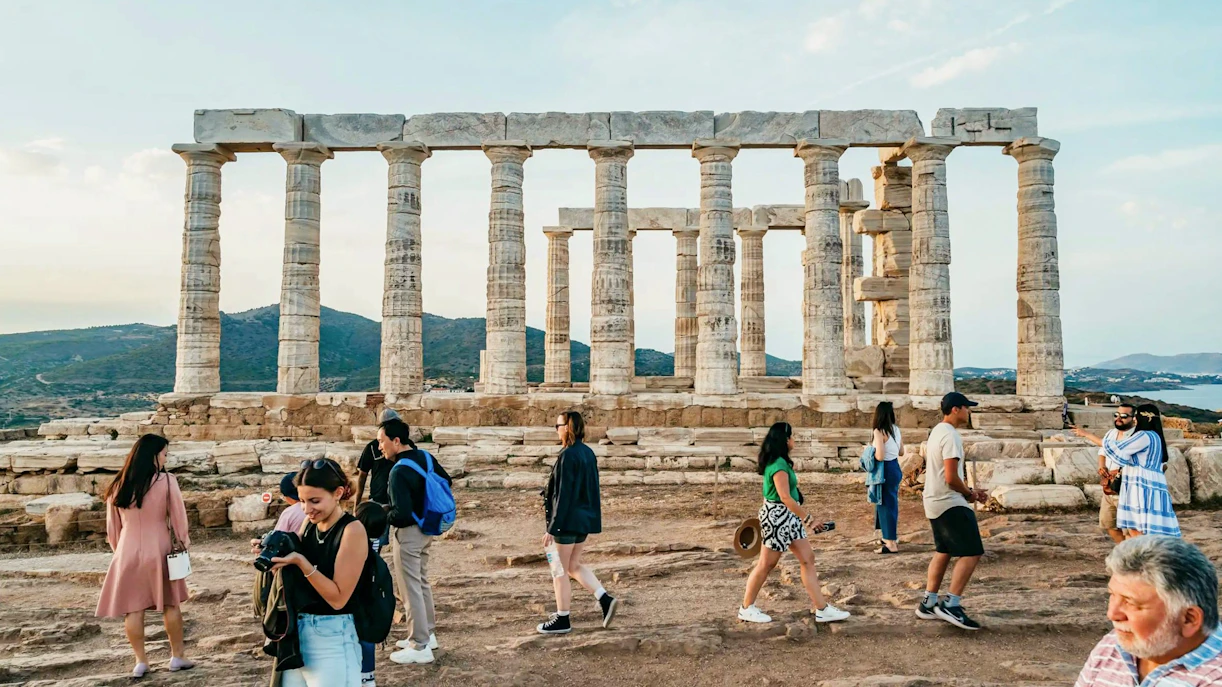
Lord Byron’s ‘Isle of Greece’
Homer’s Odyssey