Discover Cape Sounion | Home of the Temple of Poseidon

Cape Sounion at the southernmost point of the Attican peninsula is famed for the Temple of Poseidon whose Doric marble columns overlook the Aegean Sea. Legend says King Aegeus leapt to his death here, giving the Aegean Sea its name. Interested in these legends and architectural ideals that define the Golden Age of Athens? Cape Sounion invites you to explore these at the ruins of Athena Sounias and Poseidon, which inspired even the poet Lord Byron to etch his name on one of its enduring columns.

What to see at the archaeological site of Cape Sounion
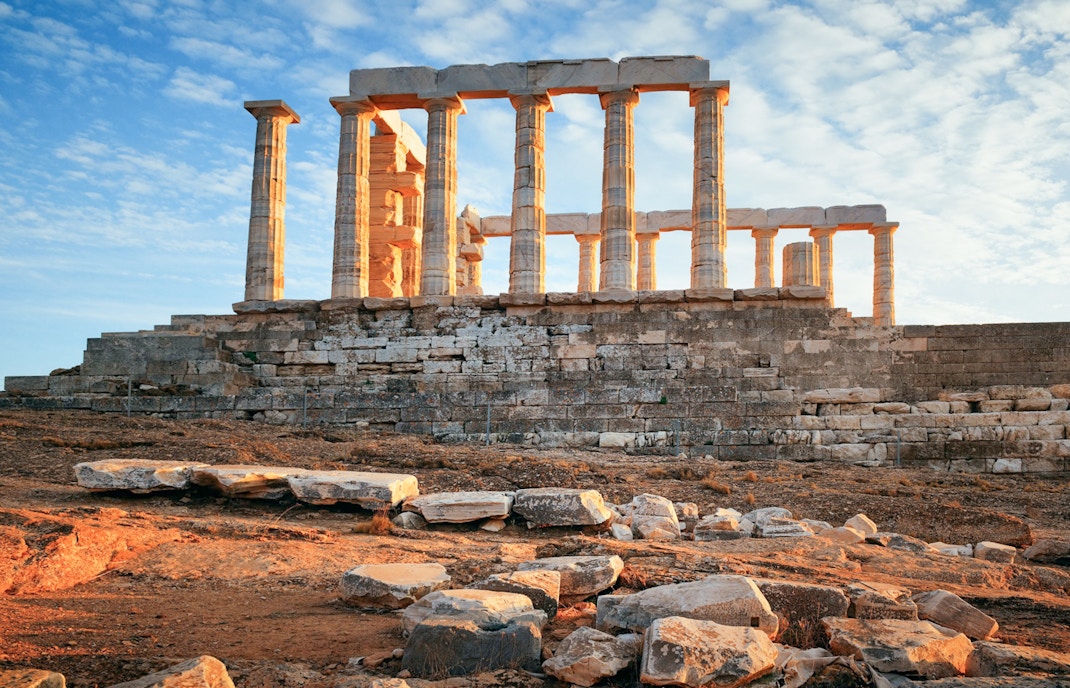
Temple of Poseidon

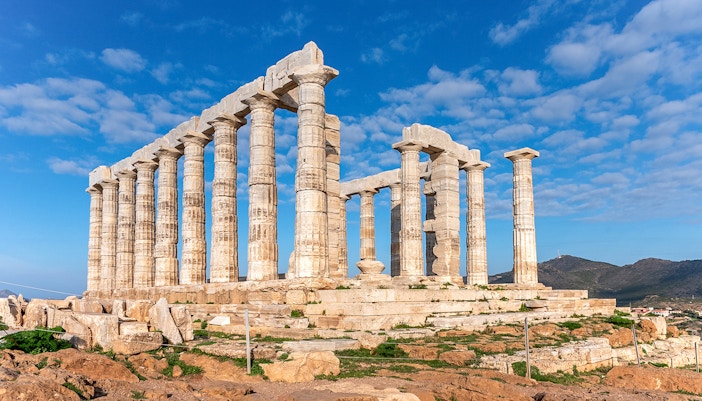
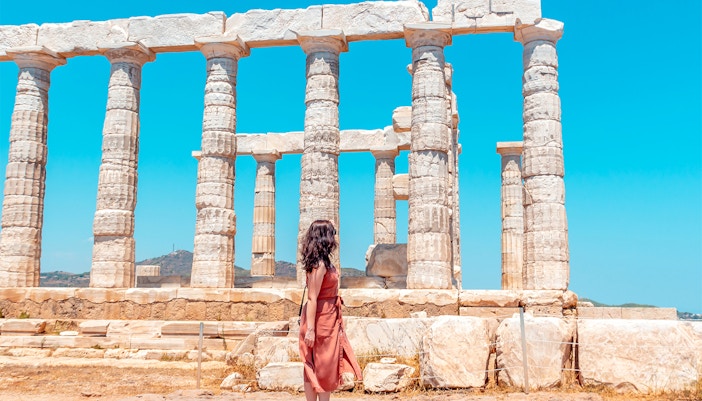
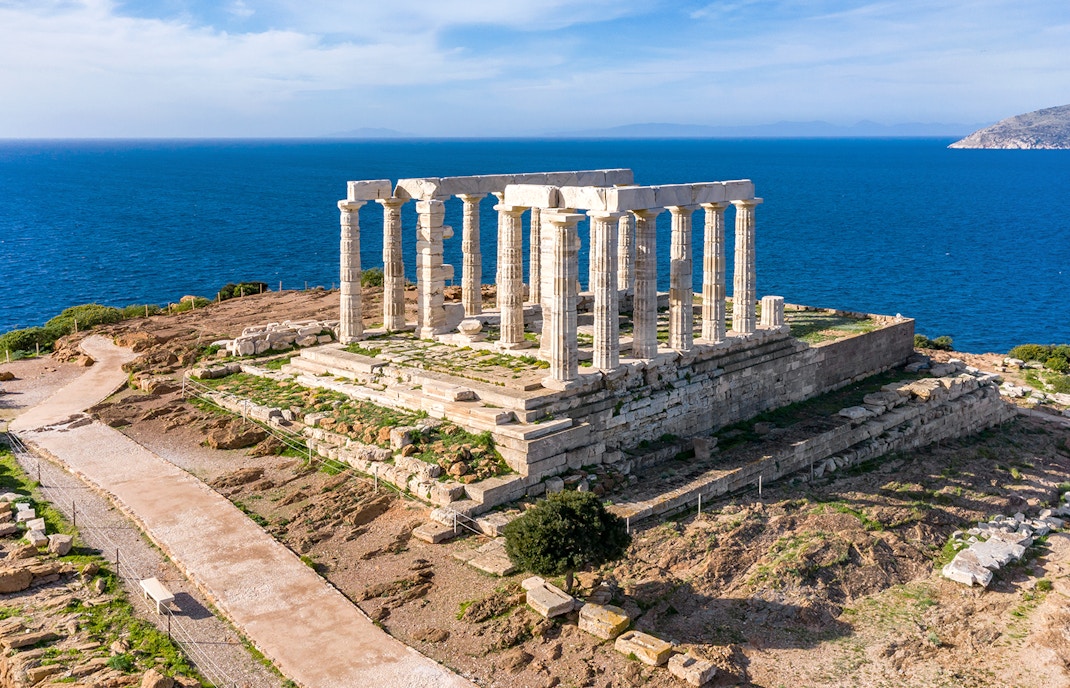
The star attraction of Cape Sounion, this majestic temple dedicated to the god of the sea overlooks the Aegean from its cliffside perch. Of its 34 original Doric columns, 15 have stood the test of time since it was built around 440 BCE. This is a testament to the sturdiness of its hexastyle structure and the craftsmanship of its ancient Greek architects.

Temple of Poseidon

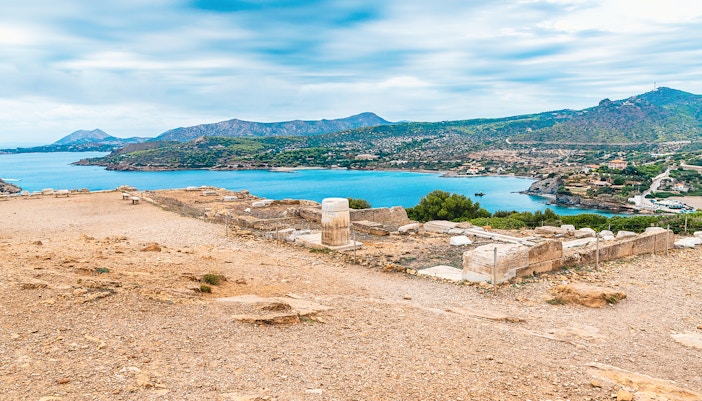
Temple of Athena Sounion

A short distance from the Temple of Poseidon, the Temple of Athena Sounion is another key historical site. Dismantled in the 1st century AD, the remnants of foundations and bases of statues show some of the best preserved early Ionic architecture. The site boasts beautiful views of the surrounding landscape.

Temple of Athena Sounion

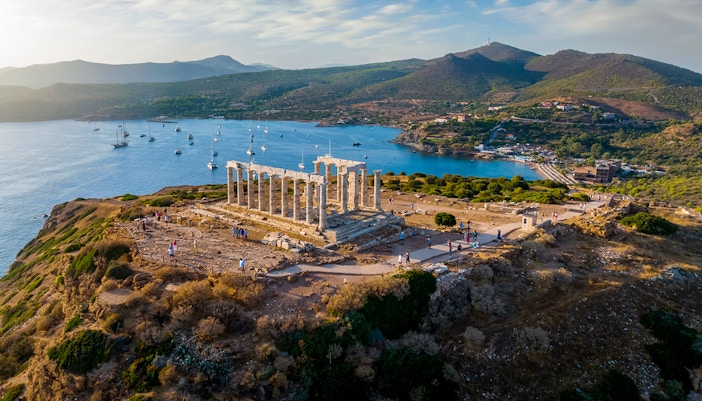
Panoramic views of the Aegean

From the top of Cape Sounion, you’ll be treated to commanding views of the deep blue Aegean Sea, the Saronic Gulf, and the surrounding coastlines. On a clear day, you can see the nearby islands, making it a fantastic spot for photography and nature lovers.

Sounio Beach

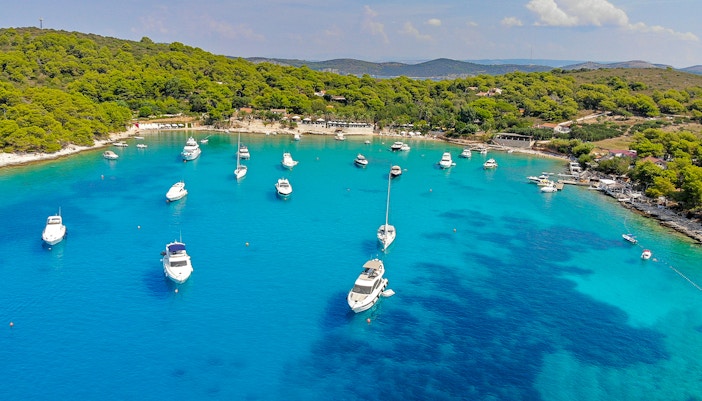
After exploring the ancient ruins, take a refreshing break at the nearby Sounio Beach. With its clear blue waters and peaceful setting, it’s the perfect spot to relax and enjoy the natural beauty of Cape Sounion. You can also swim, sunbathe, or sample some excellent Greek seafood at one of the many beachside taverns.

Archaeological Museum of Lavrion

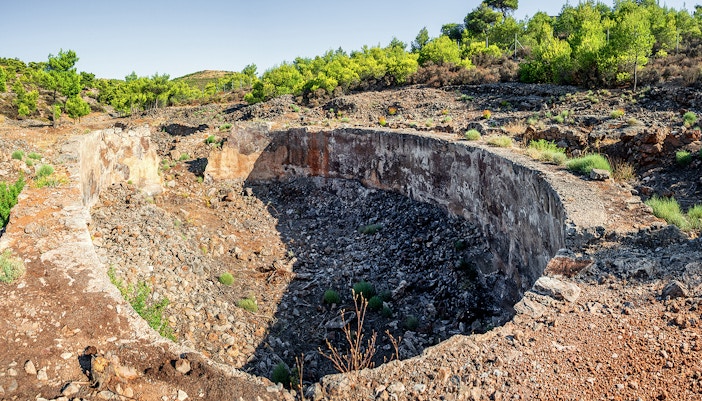
The nearby town of Lavrion and the area around Cape Sounion was renowned in Classical Antiquity for its silver mines. The city-state of Athens used the metal from here to mint their coins. The Archaeological Museum of Lavrion houses artifacts found at the archaeological site of Sounion and its surroundings, including a frieze from the Temple of Poseidon.

A historical timeline of Cape Sounion

  • 8th century BCE: Cape Sounion was first mentioned in Homer’s Odyssey as a significant landmark for sailors.
  • 6th century BCE: The Temple of Poseidon and the Temple of Athena Sounion were constructed as part of religious sanctuaries.
  • 480 BCE: Persian forces destroyed parts of the temples during the Greco-Persian Wars.
  • 440 BCE: The Temple of Poseidon was rebuilt by the Athenians during the Golden Age of Pericles.
  • 1st century CE: Roman rule led to the gradual decline of Cape Sounion’s religious significance.
  • 18th century: European travelers rediscovered the ruins, reigniting interest in the site.
  • 1834: Modern archaeological excavations began at Cape Sounion.
  • Present day: Cape Sounion is a protected archaeological site and one of Greece’s most popular tourism destinations, known for its rich history and scenic views.

Cape Sounion photos

Greek mythology and Cape Sounion

The tragic death of King Aegeus

According to Greek mythology, King Aegeus of Athens anxiously awaited the return of his son Theseus from Crete, where he had gone to fight the Minotaur. After defeating the creature, Theseus sailed back, but forgot to change his ship’s sails from black to white as a signal of his victory. When Aegeus saw the black sails, he believed his son was dead. Grief-stricken, he leapt into the sea, and the waters were named the Aegean Sea in his memory.

Sanctuary of Poseidon

Cape Sounion was also closely tied to Poseidon, the Greek god of the sea. Sailors would offer sacrifices at the Temple of Poseidon before embarking on dangerous sea voyages, seeking the god’s protection from storms and shipwrecks. The temple also acted as a landmark for sailors returning to Athens. This connection to Poseidon underscores the religious significance of the headland for seafarers.

The funeral of King Menelaus’s warrior

In his epic poem the Odyssey, the Ancient Greek poet Homer recounts that Cape Sounion was a pivotal stop for King Menelaus on his return from the Battle of Troy.  The helmsman of the ship, Phrontis, had died as they approached the cape. Menelaus and his sailors landed at Sounion to give Phrontis full honors by cremating him on a funeral pyre on the beach.

On your way to Cape Sounion and the Temple of Poseidon

The drive from Athens is along the beautiful Athenian Riviera and is one of the highlights of visiting Cape Sounion. If you’re traveling by car, choose the Athinon Souniou coastal road to see some of the towns, beaches, and historical sites along the way. You can also take short detours and experience some of these landmarks from up close.

Temple of Olympian Zeus

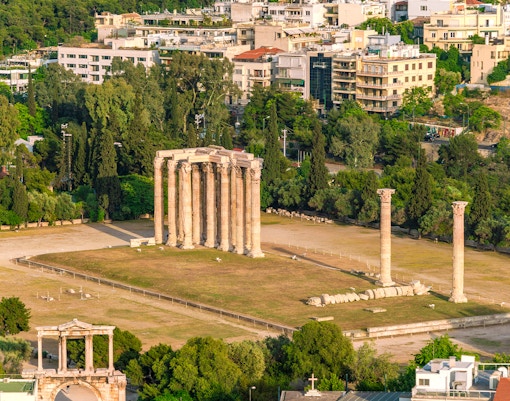
You’ll spot the Temple of Olympian Zeus as you head out for Cape Sounion from the Athens city center. As its name suggests, this temple was erected to honor the King of the Olympian Gods. It is rumored that the original structure featured 104 Corinthian columns. Of these, only 15 stand today.

Beaches of the Athens Riviera

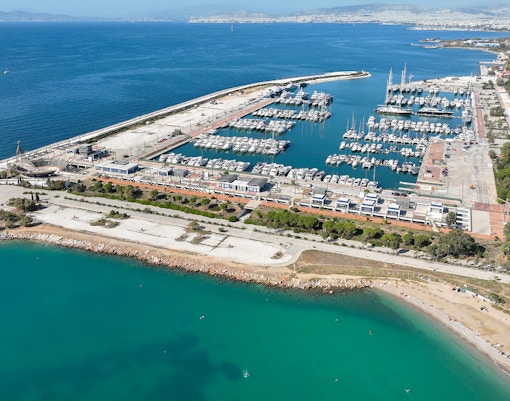
Stretching from the south of Athens down to Attica, the Athens Riviera offers everything from quiet, sandy beaches to lively marinas. Glyfada Beach is perfect if you’re after vibrant nightclubs, upscale restaurants, and trendy shops. With its sheltered cove and calm, crystal-clear waters, Kavouri Beach offers a quiet spot for a relaxing swim. The rocky inlets of Limanakia are ideal if you want to sunbathe or go snorkeling away from the crowds.

Archaeological site of Thorikos

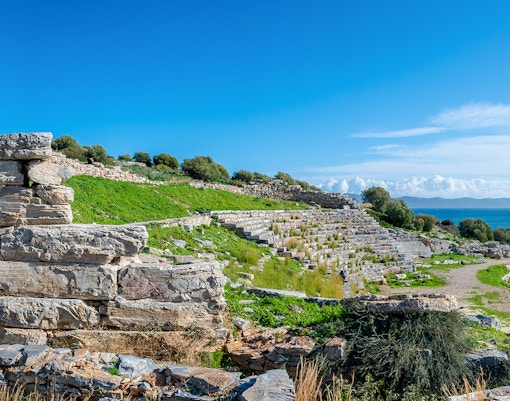
As you drive to Cape Sounion, look to the western side to spot the ancient Theatre of Thorikos. Dating back to the 6th century BCE, it was part of a significant mining settlement known for silver production. The site features a well-preserved theatre and residential areas, along with workshops and a necropolis.

Lake Vouliagmeni

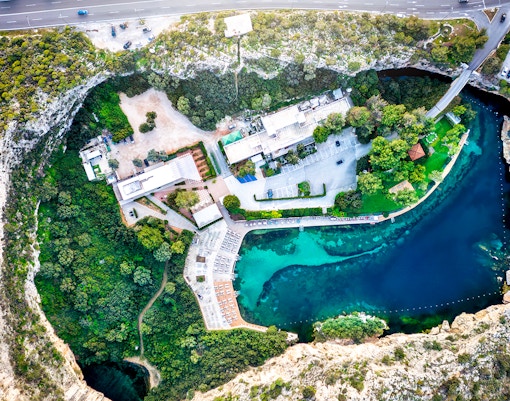
If you’re traveling along the Athinion-Souniou Road, a short detour to Lake Vouliagmeni is well worth your time. Nestled among towering limestone cliffs, this lake formed thousands of years ago through natural geological changes. Today, it’s replenished by underground thermal springs that keep its mineral-rich water warm year-round. Soak up its healing properties, unwind by the shore, or dine at one of their lake-facing restaurants.

Book your Cape Sounion and Temple of Poseidon tickets

From Athens: Temple of Poseidon & Cape Sounion Half-Day Trip

Free cancellation
Book now, pay later
5 hr. - 6 hr.
Guided tour
Transfers available
Pickup available

Combo: Acropolis + Acropolis Museum + Temple of Poseidon Guided Tour with Entry Tickets

Free cancellation
Book now, pay later
10 hr.
Meals included

Combo (Save 5%): Temple of Poseidon Sunset Half-Day Trip + Acropolis & Parthenon Tickets

Flexible duration
Audio guide
Transfers available

From Athens: Temple of Poseidon & Cape Sounion Exclusive Private Tour

Free cancellation
Book now, pay later
6 hr.
Transfers available
Pickup available

Frequently asked questions about Cape Sounion

You don’t need tickets to visit the Cape Sounion area, in general, but you will need tickets to get access to the archaeological site of Sounion. It’s best to book your Cape Sounion and Temple of Poseidon tickets online in advance so that you can visit at a date and time of your choice.

More reads

Temple of Poseidon location & directions

Book Now

Temple of Poseidon photos

Book Now

Visit Temple of Poseidon & Cape Sounion

Book Now