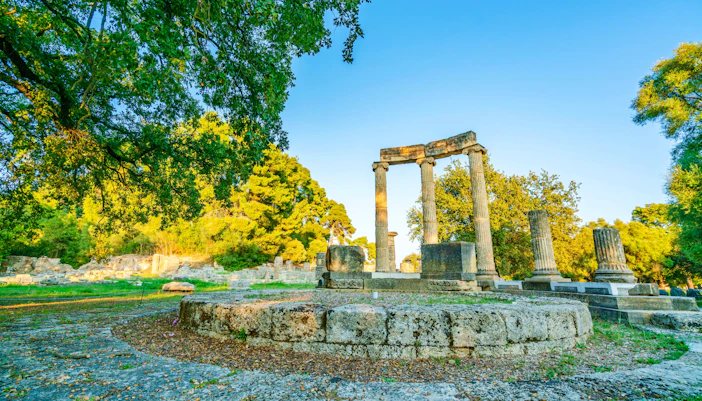
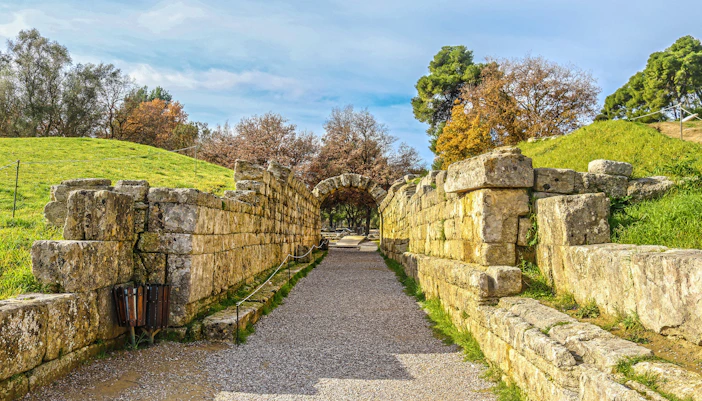
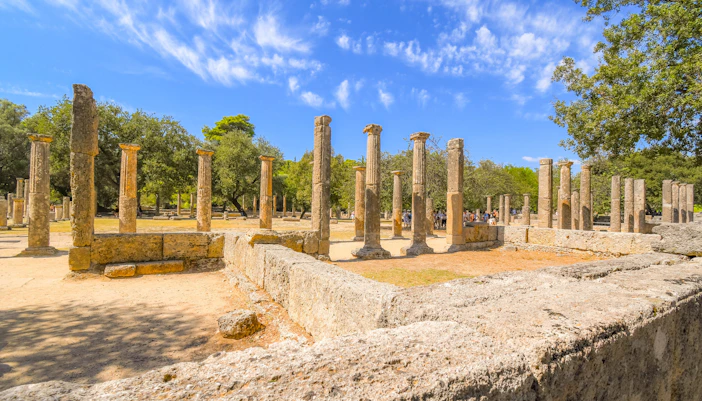
Start outdoors if you arrive near opening. The ruins are coolest and quietest before 10am, and the museum makes a smart second stop once the heat rises and tour groups begin clustering. Move through the Altis first, continue through the Krypte to the stadium, then double back to the palaestra and gymnasium before exiting for the museum. Once you leave the fenced archaeological area, the natural flow of the visit is over.
Quick Information
Plan your visitDid you know?
The Temple of Zeus at Olympia once housed a colossal gold-and-ivory statue by Phidias, considered one of the Seven Wonders of the Ancient World.
The Olympic flame for every modern Games is still ceremonially lit at the Temple of Hera using a parabolic mirror and sunlight.
The ancient stadium could seat up to 40,000 spectators and features a preserved stone starting line that visitors can still see and stand on today.
Is Ancient Olympia worth visiting?
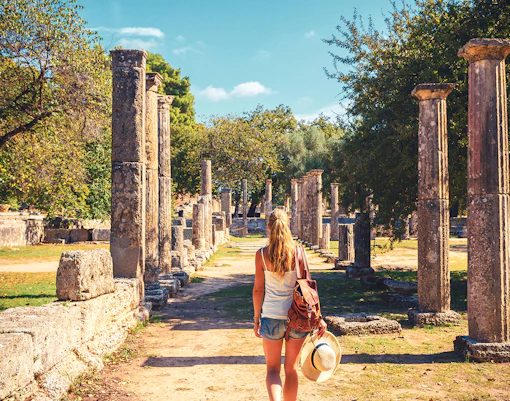
Morning at Ancient Olympia is quiet in a way famous places rarely are. You walk between pines, broken columns, and low stone outlines, then step through a vaulted tunnel into a stadium that still feels startlingly open, plain, and human in scale.
This sanctuary was built for Zeus and for the Games that once united Greek city-states in a shared ritual calendar. That purpose still gives the site its weight today. Ancient Olympia was never defined by a single perfectly preserved monument, but by a sacred landscape shaped for worship, processions, and athletic competition.
The payoff is physical connection rather than visual spectacle. Very few places let you stand on the original starting line of a tradition the modern world still repeats, then walk into a museum that restores meaning to the stones outside.
Skip it if: You want intact architecture or have little patience for open-air ruin sites that depend on imagination and context.
What to see at Ancient Olympia?
.jpeg?auto=compress%2Cformat&crop=faces&fit=crop&w=3840&q=50)
1/6
The Altis and Temple of Hera
This sacred core of Olympia holds the altar where the Olympic flame is lit today. The ruins are low, but the setting explains why the sanctuary mattered far beyond sport.
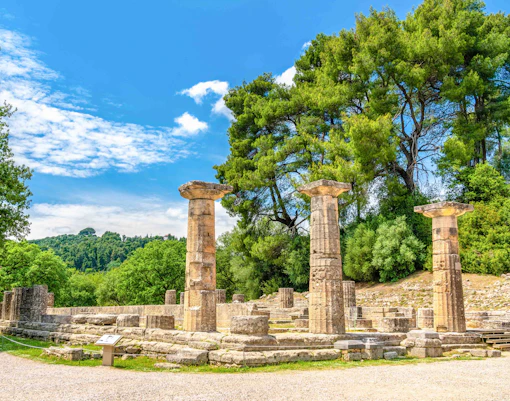
The Temple of Zeus precinct
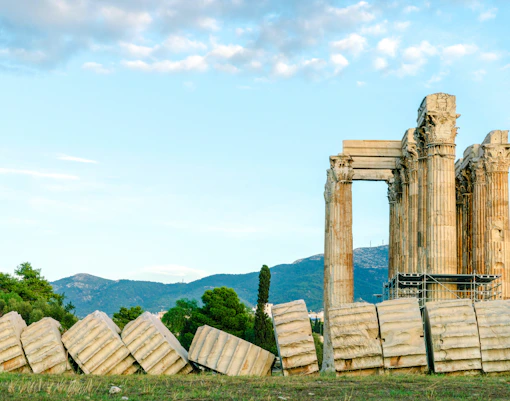
Once home to the colossal Statue of Zeus, this area is now a field of column drums and foundations. It makes the scale of the ancient sanctuary easier to grasp.
The Krypte and stadium
Walk through the vaulted stone passage, then step onto the original track where athletes raced. Most visitors linger here longer than expected, especially at the marble starting line.
The palaestra and gymnasium
These training grounds are quieter than the main route and often missed by rushed groups. Come here to understand how competitors prepared, wrestled, and practiced before entering the stadium.
The Archaeological Museum of Olympia
The museum is where Olympia really comes together. The Temple of Zeus pediments, the Nike of Paionios, and the Hermes of Praxiteles help bring the outdoor ruins to life. Plan at least 45 minutes for your visit.
The Olympic Games History Museum
Smaller and more specialized, this museum focuses on the rules, events, and evolution of the ancient Games. It is best for visitors with extra time or a strong interest in Olympic history.
How to explore Ancient Olympia?
Time needed
Budget 2–3 hours for the classic ruins-and-museum visit, or closer to 4 hours if you also want the training grounds and the Olympic Games History Museum. If you have only 90 minutes, keep your focus tight and accept that this will be a highlights visit rather than a full read of the site.
Must-see vs optional
- Must-see: The Temple of Zeus precinct, the tunnel into the stadium, the marble starting line, and the Archaeological Museum’s Hermes of Praxiteles.
- Optional: The palaestra and gymnasium show how athletes trained and take about 20–30 minutes. The Olympic Games History Museum adds more detail and takes another 30 minutes.
Guided vs. self-paced
A guide adds real value here because the ruins are fragmentary, and the best stories are not obvious from signage alone.
Brief history of Ancient Olympia
- 2nd millennium BC: Olympia develops as a sacred site in the Alpheios valley, long before the Games are formally recorded.
- 776 BC: The first recorded Olympic Games are held here in honor of Zeus, establishing Olympia’s place in Greek memory.
- 6th–5th centuries BC: The sanctuary expands with treasuries, athletic facilities, stoas, and formal spaces for ritual and competition.
- 456 BC: The Temple of Zeus is completed and later houses the colossal Statue of Zeus, one of the Seven Wonders of the ancient world.
- 393 AD: Emperor Theodosius I bans pagan festivals, bringing the ancient Olympic tradition to an end.
- 6th century AD: Earthquakes, floods, and river silt bury much of the sanctuary and preserve it beneath the landscape.
- 1875: Systematic excavations begin under German archaeologists, returning Olympia to international attention.
Architecture of Ancient Olympia
Style
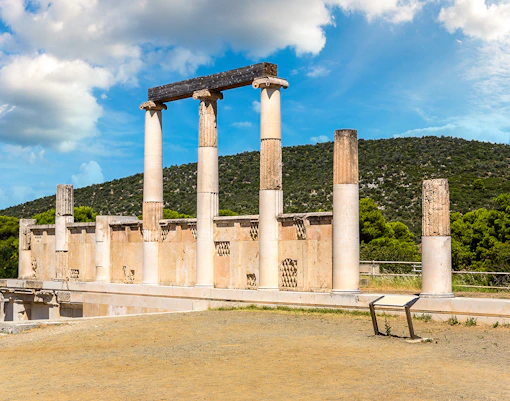
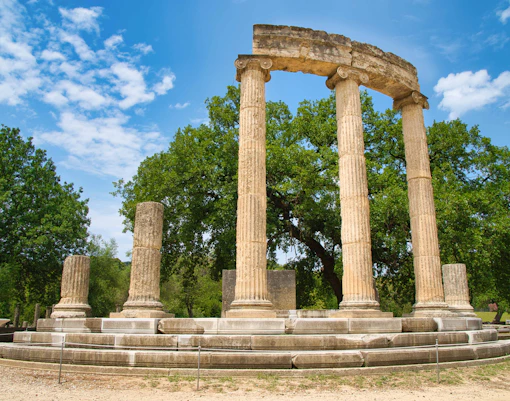
Mainly Doric, with a restrained rhythm that suits a sanctuary built for ritual, procession, and athletic discipline rather than urban grandeur.
Materials
Local limestone, stuccoed surfaces, marble sculpture, terracotta roof tiles, and packed earth give the site its pale, weathered texture.
Structure
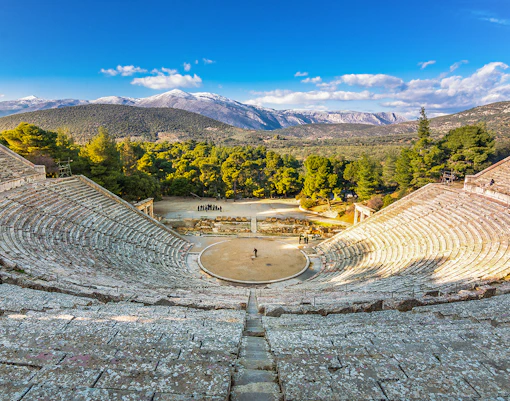
The stadium shows how Greek builders shaped landscape into architecture, using earth embankments and a simple starting line instead of monumental seating.
On the ground
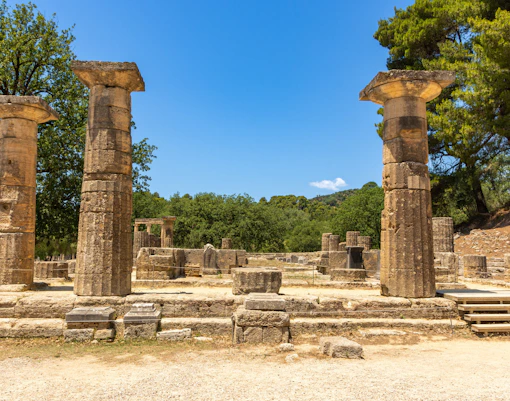
What you notice most is space, wide sacred courtyards, low foundations, and long sightlines that make movement feel deliberate.
Who built Ancient Olympia?
Ancient Olympia was not the work of one patron but of generations of Eleans, the city-state that administered the sanctuary and the Games. The site’s most famous building, the Temple of Zeus, is associated with Libon of Elis, whose severe Doric design matched Olympia’s religious and civic purpose.
Ancient Olympia and the Olympic flame tradition
Ancient Olympia is not just an archaeological memory; it still has an official role in the Olympic movement. Before each modern Olympic Games, the ceremonial flame is lit here at the Temple of Hera using the sun’s rays, then carried onward as part of the torch relay. That tradition gives the site a rare kind of continuity. You are not visiting a place that merely inspired a global event in the past; you are standing at the point where the modern Olympics still return for legitimacy, symbolism, and ritual.
Frequently asked questions about Ancient Olympia
Yes, especially if you pair the ruins with the museum. The site itself is subtle rather than monumental, so the best version of the visit is an early start plus context from a guide or an audio guide.
Most visitors need 2–3 hours for the main site and museum. If you also want the training grounds and the Olympic Games History Museum, allow 4 hours so the visit does not feel rushed. Read more about the best time to visit Ancient Olympia before planning your trip.
Do not miss the walk through the Krypte into the stadium, the marble starting line, the Temple of Zeus precinct, and the Archaeological Museum’s Hermes of Praxiteles. Those four stops give the clearest emotional and historical payoff. Check the Ancient Olympia visitor guide to make the most of your visit.
Yes, particularly for first-timers and school-age children. The stadium is the hook for younger visitors, but summer heat and limited shade can make midday visits hard, so families do better early in the day.
Early morning is the best choice. Arriving around opening helps you avoid the hottest hours and the late-morning wave of cruise and coach groups. The last 1–2 hours before closing can also feel noticeably calmer. Check out the Ancient Olympia schedule in detail.
Not always, because ticket lines are usually manageable, but advance booking Ancient Olympia tickets is still useful in summer or on cruise-heavy days. It removes ticket-booth uncertainty and helps you plan museum timing.
Yes. That is one of the most memorable parts of the visit. You can stand at the starting line and walk the length of the track, which is exactly why many visitors remember Olympia so vividly.