This gold funerary mask, unearthed in a royal Mycenaean tomb at Mycenae by Heinrich Schliemann, is one of the most famous archaeological finds in Greece. It is a powerful symbol of Mycenaean craftsmanship and early Greek culture.
National Archaeological Museum Athens Highlights: Iconic artifacts & contemporary exhibitions
Inside the National Archaeological Museum Athens
The National Archaeological Museum in Athens houses over 11,000 artifacts (sculpture, frescoes, and technical inventions) from across the Greek world. The museum offers an overview of prehistoric, classical, and Hellenistic cultures. Read on to discover must-see highlights and collections you’ll encounter inside.
Top highlights at the National Archaeological Museum Athens
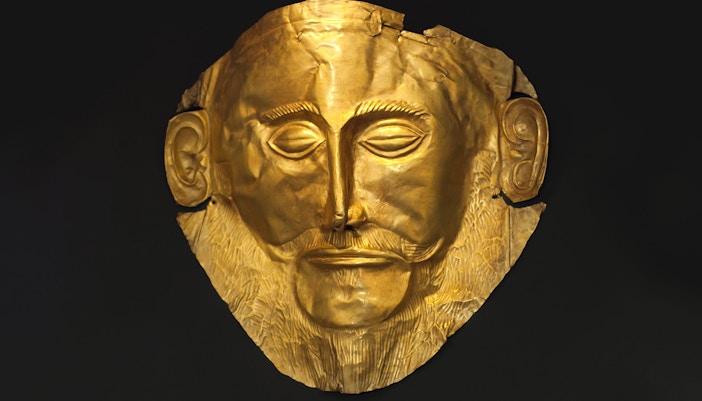
Mask of Agamemnon

Antikythera mechanism
Recovered from a shipwreck off the island of Antikythera, this 2nd-century BC device is widely considered the world’s first analog computer. Used to track astronomical positions, eclipses, and the calendar, the mechanism reflects the mechanical knowledge of its time.
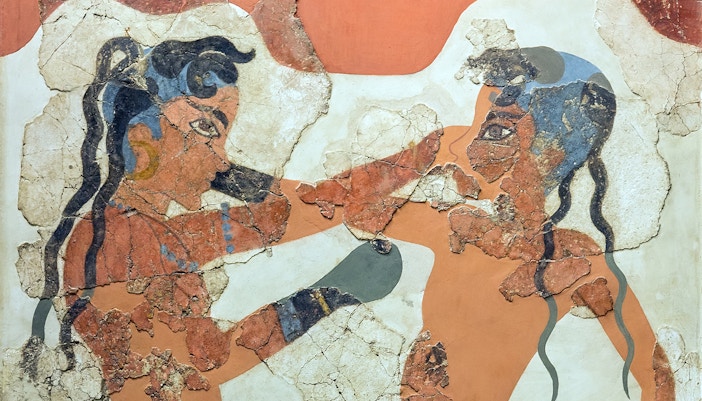
Thera wall paintings
These vivid frescoes from the Bronze Age city of Akrotiri (on Santorini) were preserved in volcanic ash after the island’s catastrophic eruption. They depict colorful scenes of nature, rituals, and daily life, offering rare insights into Aegean culture in the 17th century BC.
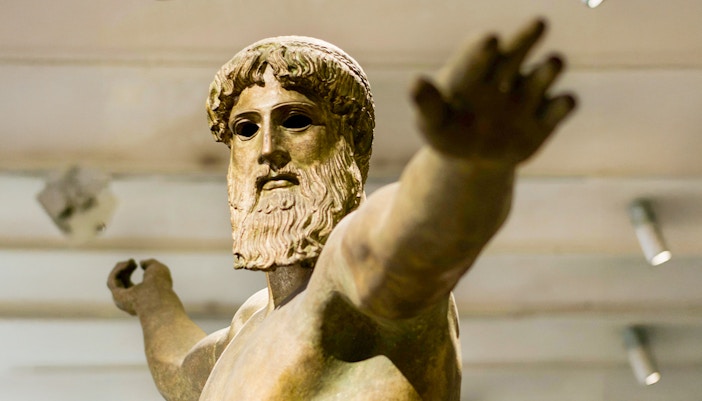
Bronze statue of Zeus or Poseidon
This life-sized bronze figure was found in the sea off Cape Artemision. The exact identity is debated, it may be Zeus hurling a thunderbolt or Poseidon with a trident, but the pose, musculature, and dramatic energy make it one of the finest examples of Classical Greek sculpture.
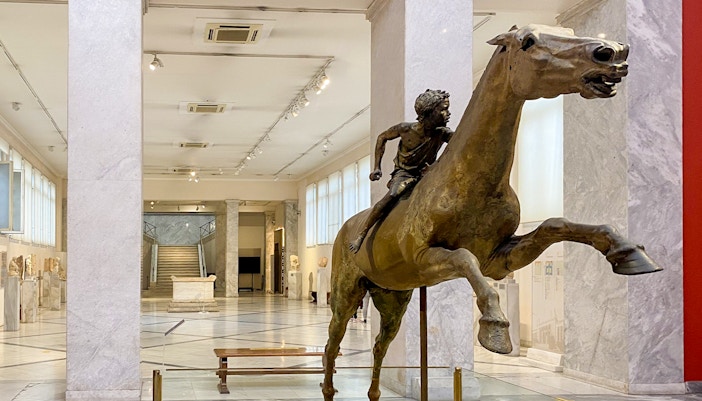
Horse and jockey of Artemision
Discovered in the same shipwreck as the Artemision bronze, this remarkable Hellenistic sculpture captures a galloping horse with a young boy riding bareback.
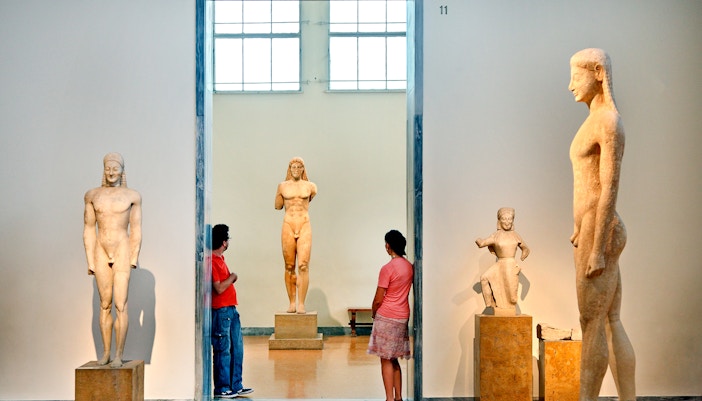
Kore and kouros statues
These statues of a young maiden (kore) and youth (kouros) come from the Archaic period and were typically used as grave markers or temple offerings.
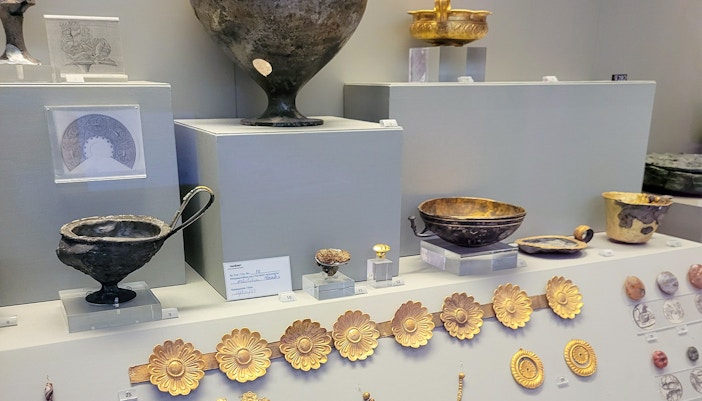
Mycenaean collection
In addition to the Mask of Agamemnon, the museum holds a vast array of gold jewelry, engraved weapons, ceremonial vessels, and wall reliefs from Mycenaean tombs. This collection sheds light on the complex social structures and burial rituals of the Mycenaean elite.
Cycladic figurines
These abstract marble figures from the Cycladic islands predate Classical Greece by nearly two millennia. Their minimalist form, typically folded-arm female figures, has inspired countless modern artists and offers insight into early Aegean religion and burial customs.
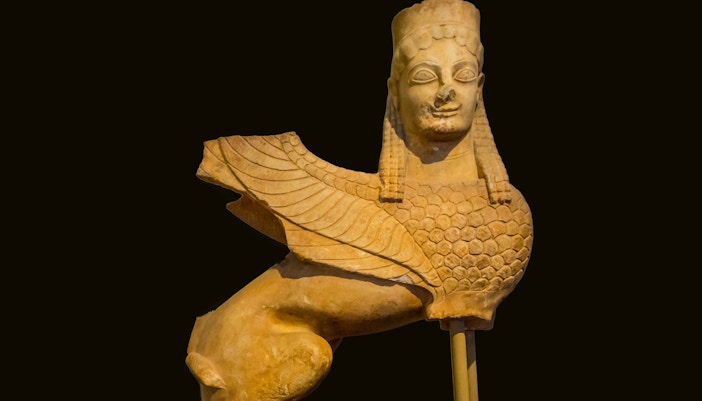
Egyptian antiquities
This section includes mummies, painted coffins, statues of deities, and amulets from dynastic Egypt. The museum’s Egyptian collection is one of the most significant in Southern Europe and explores connections between Greek and Egyptian cultures during antiquity.
The National Archaeological Museum collections
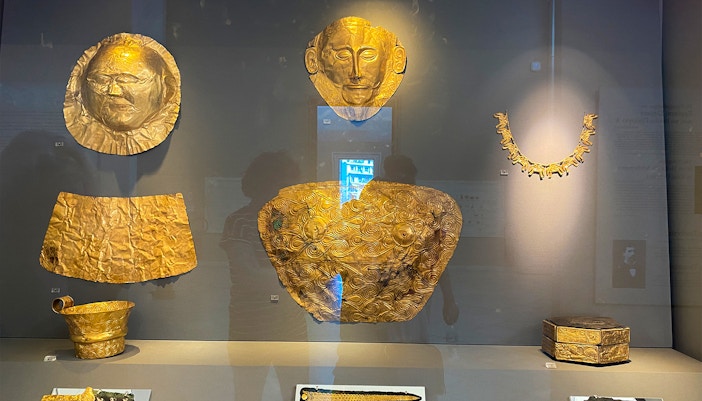
Metalwork and jewelry
This section presents finely crafted weapons, armor, and decorative items. You’ll see bronze helmets worn by hoplite warriors, silver vessels used in elite households, and intricate gold wreaths used in ceremonial or funerary contexts.
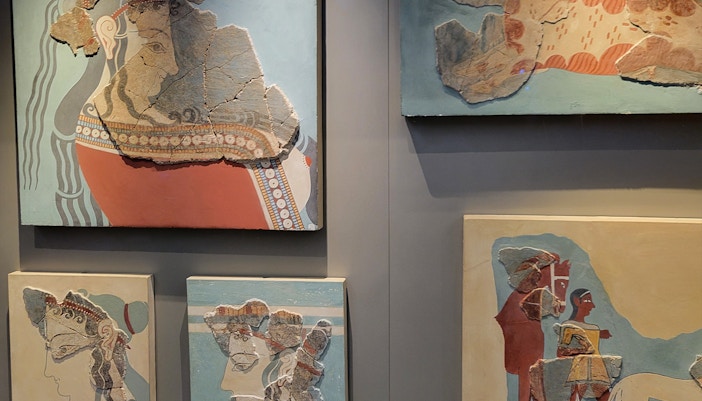
Roman period collection
The Roman-era rooms feature marble statues, portraits, and mosaics, showcasing how Roman patrons adopted and adapted Greek artistic traditions. Many of the works are Roman copies of earlier Greek masterpieces, giving visitors a unique chance to see how Greek styles lived on during the empire.
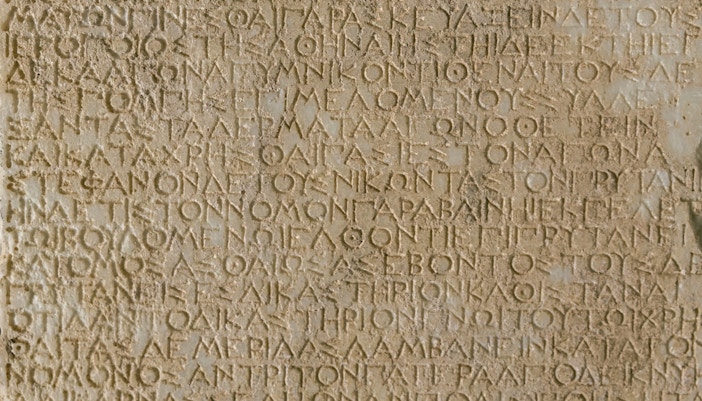
Epigraphic Museum
Located in the same complex, this museum holds over 14,000 inscriptions, ranging from legal decrees and public records to epitaphs and dedications. It provides a fascinating look into the administrative, religious, and civic life of ancient Greece.
Frequently asked questions about museum highlights
The Mask of Agamemnon is widely considered the museum’s most iconic artifact due to its age, beauty, and historical significance.
The Antikythera Mechanism is a 2nd-century BC device used for astronomical calculations, considered the world’s first analog computer.
Yes, the museum houses several well-preserved Thera frescoes from the ancient city of Akrotiri.
You’ll see gold diadems, ceremonial cups, bronze swords, and carved stone seals from royal tombs.
It’s one of the largest Egyptian collections in Greece, featuring over 1,000 artifacts, including sarcophagi, statues, and everyday items.
Visit early in the morning on weekdays, especially Tuesdays after 1pm when the museum opens later and is less busy. Plan your visit to the National Archaeological Museum with this complete guide.
Yes, non-flash photography is allowed throughout the museum. However, tripods and video recording are not permitted.
Most major sculptures, including the Artemision bronzes and kouroi, are located on the ground floor in the Sculpture Collection.
Plan to visit to National Archaeological Museum for at least 2 to 3 hours to comfortably view the main galleries and major works. This complete guide helps you plan your visit


